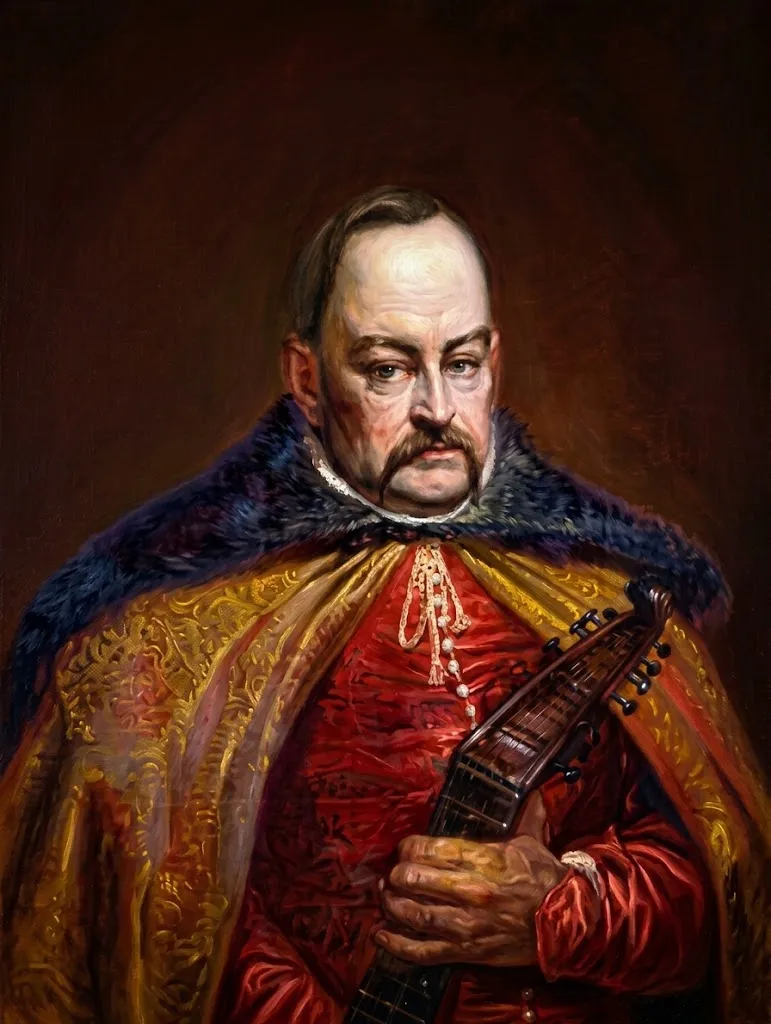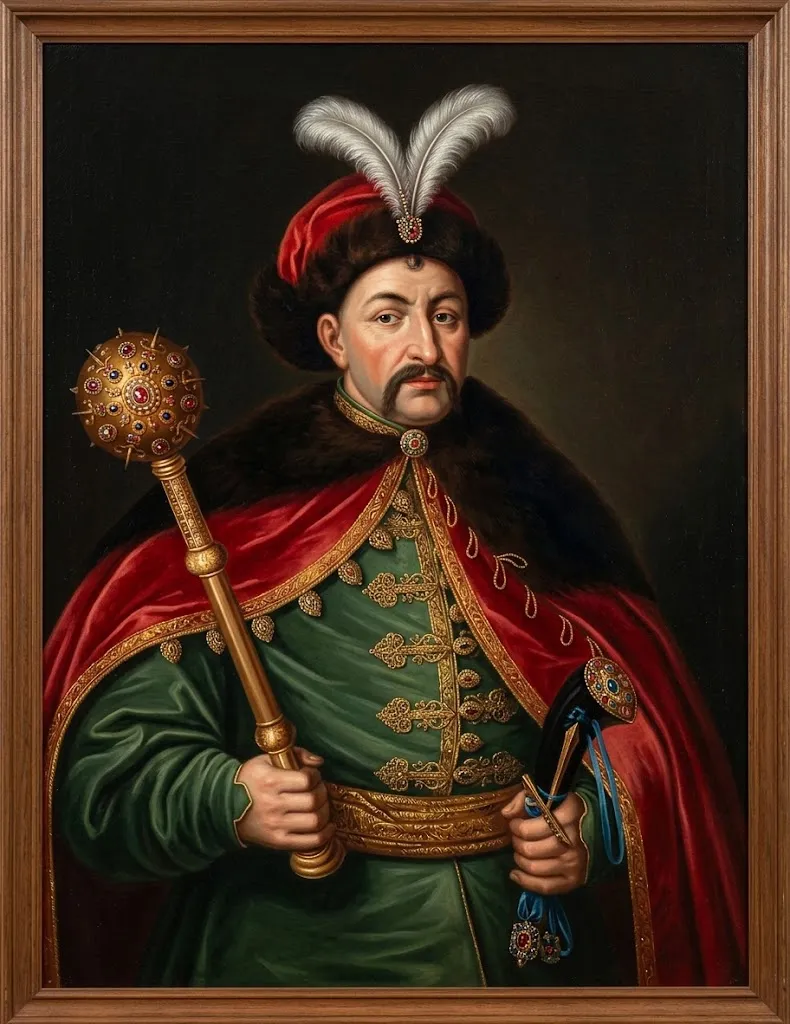
Yaroslav Osmomysl
Prince who strengthened Halych
Why was a prince called “eight-minded”? Yaroslav Osmomysl extended Halych’s reach to the lower Danube, built up towns and dealt with European rulers. Yet powerful nobles could still overrule him at home.
Key accomplishments
- Strengthened the principality of Halych during his reign of 1153–1187
- Extended Halych’s authority between the Carpathians, the Dnister and the lower Danube
- Maintained diplomatic ties with Hungary, Poland and Byzantium
- The Dormition Cathedral in old Halych was built during his reign
A prince with eight minds
Eight minds rather than one? That is the usual explanation of the unusual epithet attached to Yaroslav Volodymyrkovych, prince of Halych. It survives in The Tale of Ihor’s Campaign, whose author appeals to the ruler as a powerful ally. It is a poetic image of wisdom, not evidence that the prince spoke exactly eight languages.
His birth year is unknown. His father, Volodymyrko Volodarovych, had united the Galician lands. Yaroslav inherited his throne in 1153, along with rivals: princes in Kyiv, claimants from his own dynasty and the powerful local nobles known as boyars.
From the Carpathians to the Danube
His rise began with a defeat. Prince Iziaslav Mstyslavych of Kyiv defeated the Galician army near Terebovlia. After Iziaslav’s death in 1154, relations with Kyiv grew calmer, though rivalry between the princes continued.
Yaroslav gradually strengthened his principality. Halych’s authority extended over the lands between the Carpathians and the Dnister and into the lower Danube region. River routes carried trade far beyond the region. Towns grew and gained stronger defenses; commerce and salt production brought wealth. The boyars also grew richer, and increasingly wanted a say in government.
Diplomacy was another source of Halych’s strength. Yaroslav maintained relations with Poland, Hungary, Byzantium and Emperor Frederick Barbarossa. When a neighboring prince could become an enemy overnight, agreements mattered as much as an army.
A cathedral and a ruler’s limits
A stone cathedral could announce a city’s importance without a word. The Dormition Cathedral in old Halych was built during Yaroslav’s reign. He was buried there after his death in 1187.
Yet power abroad did not give him complete control at home. The boyars intervened in both government and family affairs. During a conflict over his relationship with Nastasiia, they executed her and forced him to return to his wife, Olha. Before he died, Yaroslav left Halych to his son Oleh and Peremyshl to Volodymyr. The boyars expelled Oleh after his father’s death. A prince’s last wishes could not guarantee who would inherit his power.
Debates and assessments
Even the name we know him by needs explanation. Scholars debate the meaning of Osmomysl and whether it should be treated as an epithet used during his lifetime: the chronicles call him Yaroslav Volodymyrkovych.
Archaeology has left questions too. In 1937 Yaroslav Pasternak discovered a sarcophagus in the Dormition Cathedral and attributed the burial to the prince. Later anthropological research supported that identification, but other scholars dispute it. The identity of the remains should therefore not be presented as settled.
Why it matters today
Under Yaroslav, Halych became a strong center of Rus’ statehood in what is now western Ukraine. His reign shows how towns, trade and diplomacy support a state alongside its army. The debates surrounding his life also offer a useful lesson: respect for the past begins with a willingness to test familiar stories against the evidence.