1892–1942
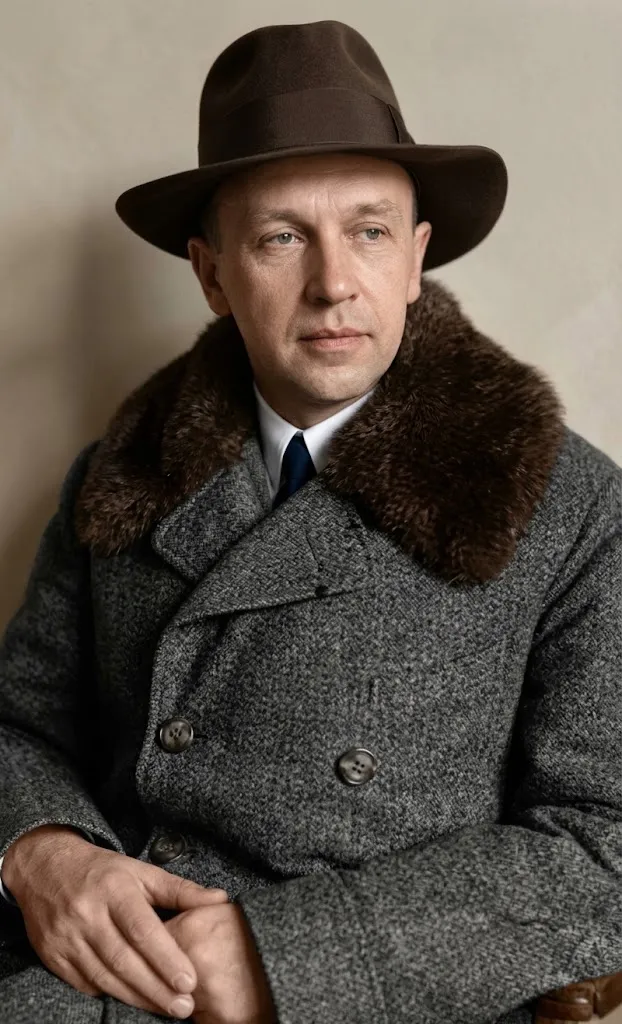
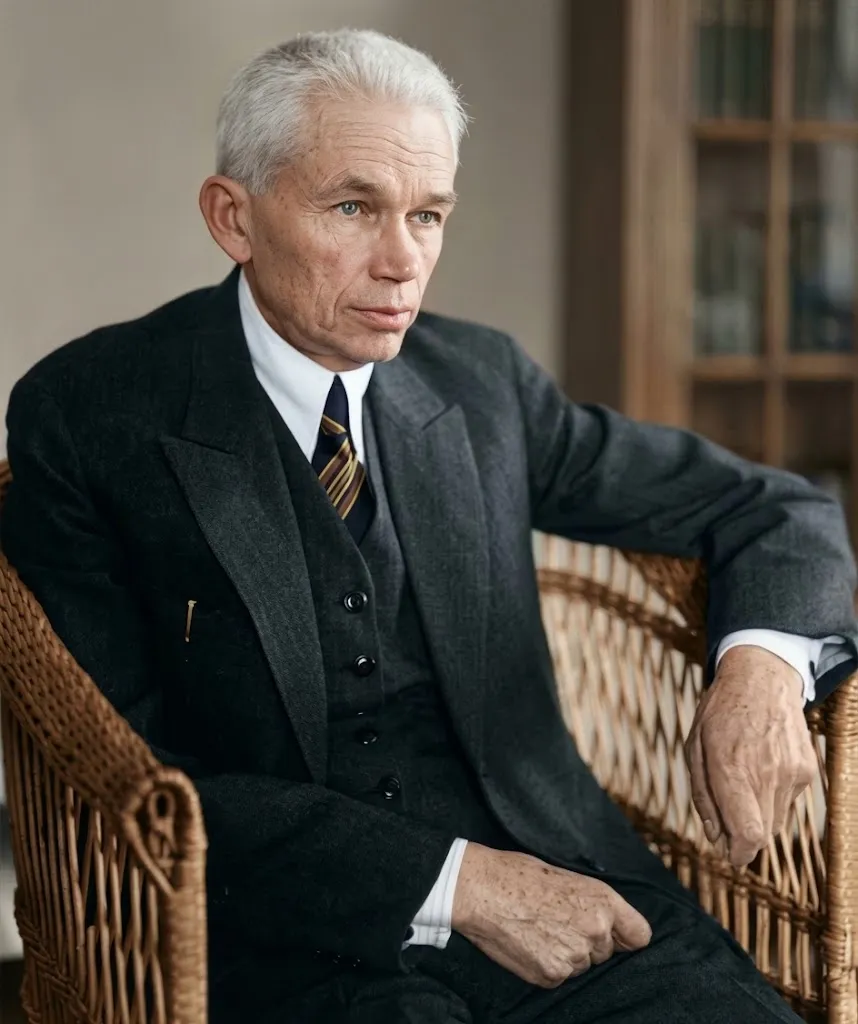
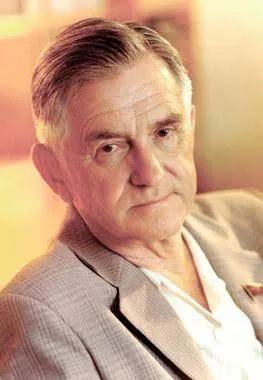
Mykhailo Kravchuk
Mathematician, academician
The future spacecraft designer Serhii Korolov sat in his lectures, and the American John Atanasoff wrote to tell him he had used his work. Mykhailo Kravchuk from Volyn was a world-class mathematician who taught mathematics in Ukrainian. In 1942 he died in the Kolyma camps.
Key accomplishments
- A paper at the International Congress of Mathematicians in Toronto (1924)
- More than 180 works, among them over 10 monographs on algebra, number theory, differential equations, probability and statistics
- Kravchuk polynomials and Kravchuk moments, used in coding theory and image processing
- Ukrainian mathematical terminology; the first Ukrainian translation of Kiselyov’s geometry textbook (1919); a three-volume mathematical dictionary
- Member of the All-Ukrainian Academy of Sciences (1929) and of the mathematical societies of France, Germany and Italy
A boy from Chovnytsia
Mykhailo Kravchuk was born in 1892 in the village of Chovnytsia in Volyn. His father was a land surveyor, and the boy learned much of what he knew at home, from his parents. He finished the gymnasium in Lutsk with a gold medal, and in 1914 graduated from the physics and mathematics faculty of Kyiv University with a first-class diploma. The university kept him on to prepare for a professorship.
Mathematics in Ukrainian
How do you teach mathematics in Ukrainian when the language doesn’t yet have all the words? After the 1917 revolution Kravchuk taught at the First and Second Ukrainian Gymnasiums in Kyiv and at the Ukrainian People’s University. He worked on Ukrainian mathematical terminology, and in 1919 made the first Ukrainian translation of Kiselyov’s well-known geometry textbook. He then spent two years as headmaster of a village school in Savarka, south of Kyiv. One of his pupils there was Arkhyp Liulka, who later designed the first turbojet engines.
From Kyiv to Toronto
Back in Kyiv, Kravchuk taught at the Kyiv Polytechnic Institute. In 1924 he defended his doctorate and spoke at the International Congress of Mathematicians in Toronto. From 1924 to 1926 his lectures at the Polytechnic were attended by Serhii Korolov, the future designer of spacecraft. In 1929 more than a hundred organizations nominated Kravchuk to the Academy of Sciences, and he became an academician. He corresponded with scholars all over the world. A letter survives from John Atanasoff, author of one of the first designs for an electronic computer, saying he had used Kravchuk’s work.
Kolyma
In Stalin’s terror those very ties to the world became the charge. In 1937 a newspaper attacked the academician for naming repressed scholars in an article. On 21 February 1938 Kravchuk was arrested and accused of treason and spying: he was a member of the Shevchenko Scientific Society in Lviv, had travelled abroad and wrote to colleagues there. He was sentenced to 20 years. In Kolyma he kept developing his ideas, but his notes did not survive. Mykhailo Kravchuk died on 9 March 1942 in Kolyma, near Magadan; where he is buried is unknown. In 1956 his case was closed for lack of any crime, and in 1992 the Academy of Sciences of Ukraine restored him as a full member. UNESCO has entered his name in its International Calendar of eminent scientists.
Why it matters today
Mykhailo Kravchuk proved that world-class mathematics could be done in Kyiv, and in Ukrainian. He helped build that language for mathematics and took his results to the world’s congresses. His polynomials and moments are still at work in coding theory and image processing, in the technology that carries and handles data. The regime took his freedom, his notes and his life, but not his ideas. Anyone who solves a problem in Ukrainian walks a road he helped lay.