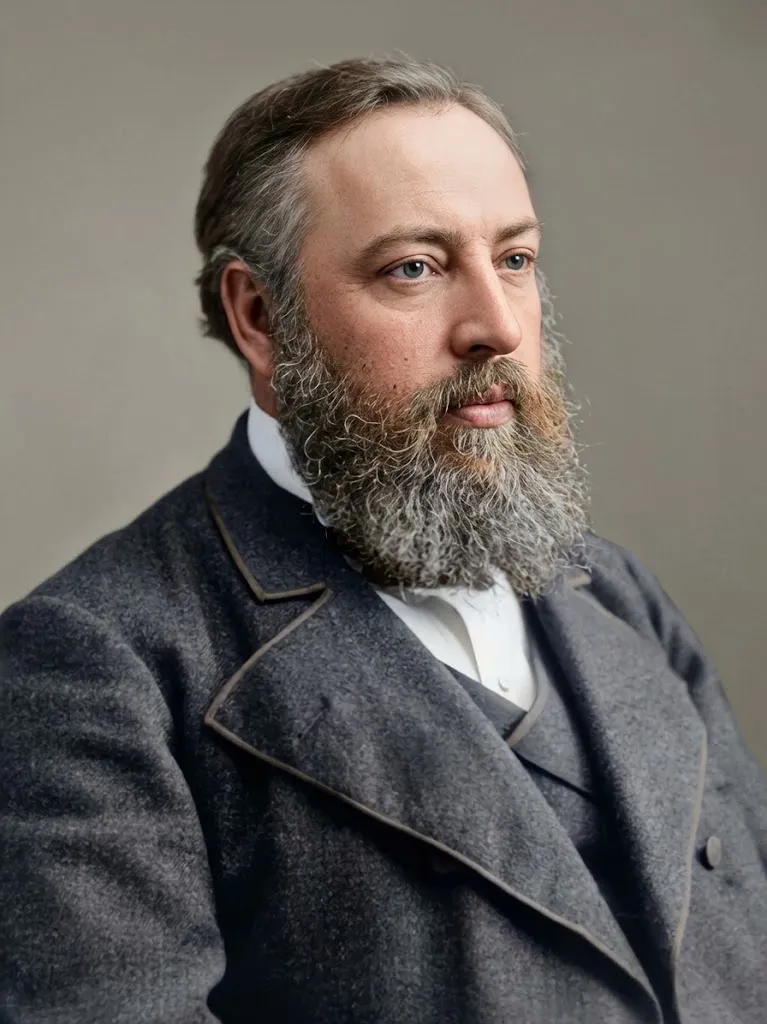
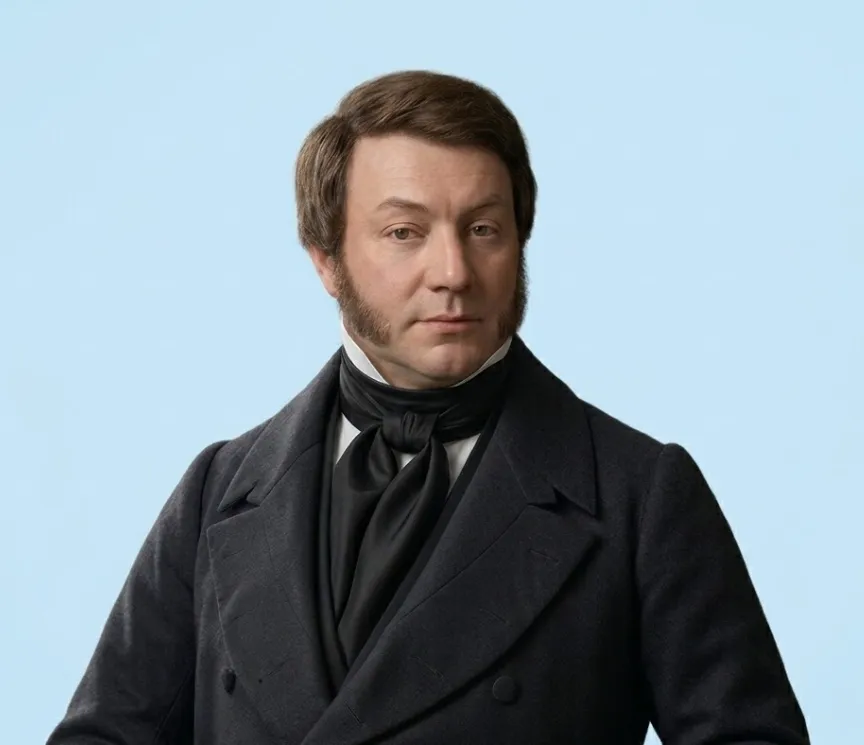
Nikolai Gogol
Classic of world prose
Critics tore his first poem apart, but his next book, stories about a Ukrainian village, made him famous overnight. Gogol wrote in russian, yet it was his Evenings on a Farm Near Dikanka and Taras Bulba that showed the world Ukraine.
Key accomplishments
- The collections Evenings on a Farm Near Dikanka and Mirgorod (with the stories Taras Bulba and Viy)
- The comedy The Government Inspector (1836) and the novel Dead Souls (1842)
- The story The Overcoat (1842), which influenced world literature
A flop, then fame
Nikolai Gogol was born in Velyki Sorochyntsi in the Poltava region, into the old Ukrainian Hohol-Yanovskyi family, and grew up on his parents’ estate at Vasylivka (now the village of Hoholeve, home to a museum in his name). At 19 he finished the Nizhyn Gymnasium of Higher Sciences and set off for Saint Petersburg to make his name in literature. His first attempt failed: critics tore his romantic poem apart.
Success came with a different book. Evenings on a Farm Near Dikanka, stories about the Ukrainian village full of humor, folklore and the supernatural, made him famous overnight. Next came the collection Mirgorod, with Taras Bulba and Viy. Gogol dreamed of becoming a professor of history at the newly founded university in Kyiv, but did not get the post and taught ancient history at Saint Petersburg University instead.
Books that changed prose
Later Gogol wrote the comedy The Government Inspector, the novel Dead Souls and the story The Overcoat, which shaped the development of world prose. He wrote in russian, but Ukrainian themes, folklore and history run through much of his work.
He spent many years abroad, mostly in Rome, and came back only in 1849. In his last years Gogol went through a deep religious crisis. In 1847 he published Selected Passages from Correspondence with Friends, and shortly before his death he burned the manuscript of the second volume of Dead Souls. He died in Moscow in 1852.
Debates and assessments
Gogol’s national identity is a long-standing subject of dispute. He wrote in russian and belongs to both russian and Ukrainian culture; in Ukraine, emphasis is placed on his Ukrainian origin and themes. Scholars still argue, too, about how Gogol himself felt about Ukraine. This profile presents him as a writer of Ukrainian origin whose works brought Ukraine into world literature.
Why it matters today
Gogol showed the world a vivid picture of Ukraine: its people, customs, history and humor. For readers in many countries, his stories of the Ukrainian village were their first glimpse of Ukraine. When critics tore apart his first poem, he didn’t give up; he found his own voice in what he had known since childhood. That makes him an example for anyone who writes about home: what you grew up with can capture the whole world.