Markiian Shashkevych
Poet, priest, awakener of Galicia
Of the thousand copies of his book, the police took eight hundred. Markiian Shashkevych, poet and Greek Catholic priest, led the Ruthenian Triad. Their almanac, The Dniester Nymph, began literature in living Ukrainian in Galicia.
Key accomplishments
- Inspirer and leader of the Ruthenian Triad (with Yakiv Holovatskyi and Ivan Vahylevych)
- Co-compiler and publisher of the almanac Rusalka Dnistrovaia (The Dniester Nymph; printed in Buda in 1836, dated 1837)
- One of the first sermons in Ukrainian (Lviv, 1836)
- The first Ukrainian sonnets; translations from The Tale of Ihor’s Campaign and of the Gospels into living Ukrainian (1842)
A thousand books, and the police took eight hundred
A slim book dated 1837 on its title page, the almanac Rusalka Dnistrovaia, The Dniester Nymph, came off a press in the Hungarian city of Buda in December 1836. It was printed far from home because the censors in Lviv would never have passed it. Even so, the censor in Galicia banned it from being sold in the province: he objected to its language, its spelling and its content. Of the thousand copies, the police in Lviv confiscated eight hundred, so only about two hundred reached readers. The ban was lifted in 1848.
What was so frightening about the book? It spoke the language the villagers of Galicia spoke. Until then, writers there used a bookish mixture called yazychiie, but The Nymph printed folk songs, poems and translations in living Ukrainian, in a new spelling that followed how words sound. That is why it is seen as the beginning of modern Ukrainian literature in Galicia.
Three seminarians with Slavic names
He found his kindred spirits at the seminary. Markiian Shashkevych was born in 1811 in the village of Pidlyssia in the Lviv region, into a priest’s family. He studied in Lviv and Berezhany, and at the Greek Catholic seminary in Lviv he found two kindred spirits, Yakiv Holovatskyi and Ivan Vahylevych. Together they formed the Ruthenian Triad, with Shashkevych as its inspirer and leader. The friends took old names: Ruslan, Dalibor and Yaroslav.
The Triad wrote down folk songs, studied history and read the Eneida of Ivan Kotliarevskyi. The young men became convinced that the Ruthenians of Galicia, Bukovyna and Transcarpathia were part of one Ukrainian people with a language of its own. Shashkevych did not lack spirit: the seminary once expelled him for breaking its rules and for “free-thinking”, but he came back and graduated in 1838.
Their first collections, Syn Rusi (Son of Rus’, 1833) and Zoria (The Star, 1834), were stopped by the censors. In The Star Shashkevych had written a life of Hetman Bohdan Khmelnytskyi. The censors also stopped his Reader for Children (1836): Yakiv Holovatskyi published it only in 1850, after the author’s death. And when there were attempts in Galicia to switch Ukrainian writing to the Latin alphabet, he argued against it in a pamphlet, Azbuka i abecadło.
A sermon nobody expected
At St George’s Cathedral in Lviv in 1836, Shashkevych gave one of the first church sermons in Ukrainian. He believed that educated people and the church alike should speak the native language. A plaque honouring that sermon was put up on the cathedral in 1911 and disappeared in 1914; in 2017 a new one was made from an archival sketch.
He wrote poetry too, and is considered the author of the first Ukrainian sonnets. He translated from Serbian, Czech, Polish, Greek, Latin and German. He was one of the first to translate passages of The Tale of Ihor’s Campaign into Ukrainian, and in 1842 he put parts of the Gospels into living Ukrainian.
A short life, a long memory
After the seminary Shashkevych served as a village priest in Humnyska, Nestanychi and Novosilky in the Lviv region. He lived in poverty, fell ill with tuberculosis and died in 1843, before he turned 32. His son Volodymyr also became a poet.
In 1893 his remains were moved to Lychakiv Cemetery in Lviv, and more than ten thousand people came out to meet them. And in 1911, on the centenary of his birth, a 25-metre monument designed by the architect Oleksandr Lushpynskyi was raised on Bila Hora, the White Hill, near his native Pidlyssia; its cross was forged in Mykhailo Stefanivskyi’s workshop in Lviv. The monument was restored for the first time only more than a century later, in 2021–2023.
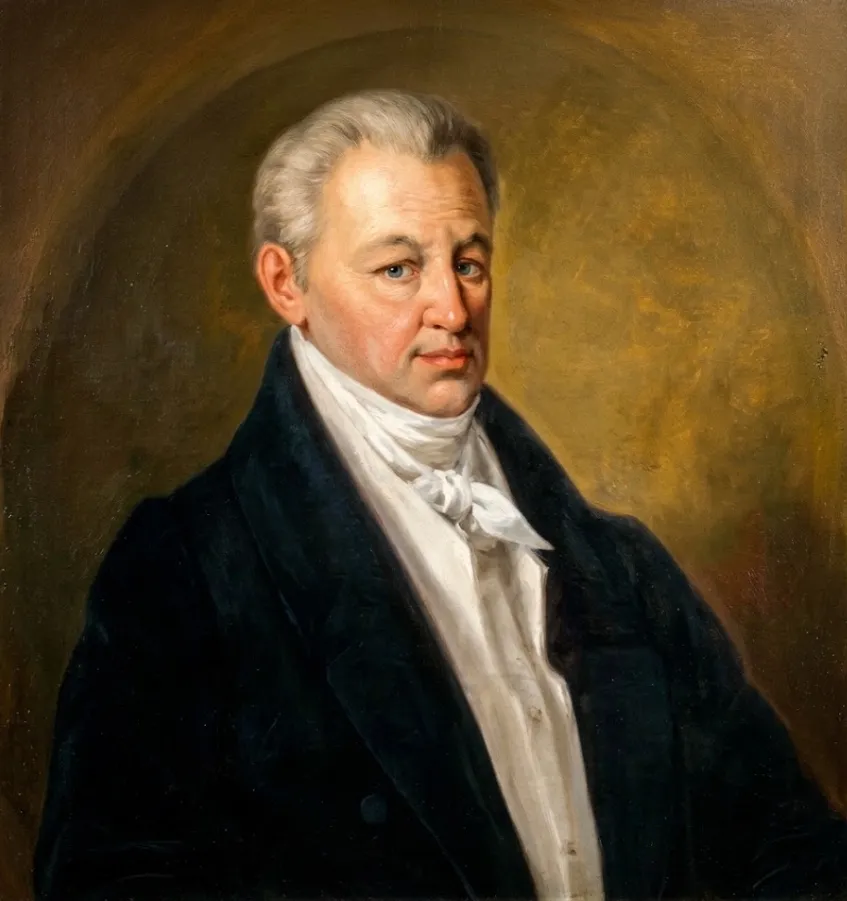
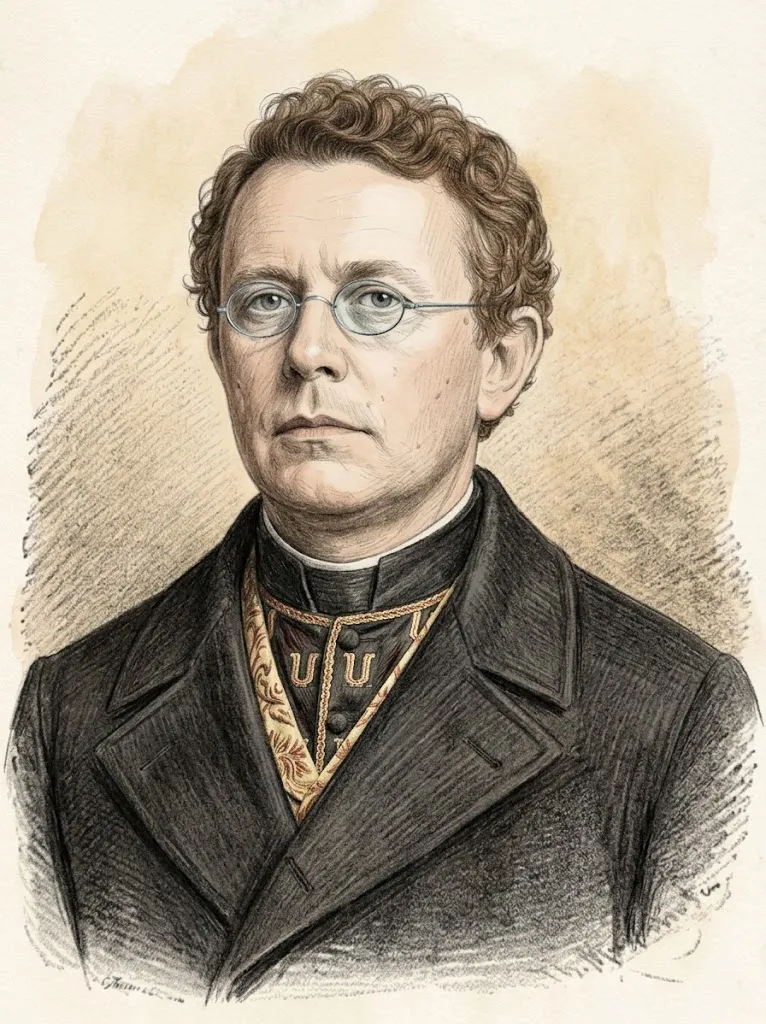
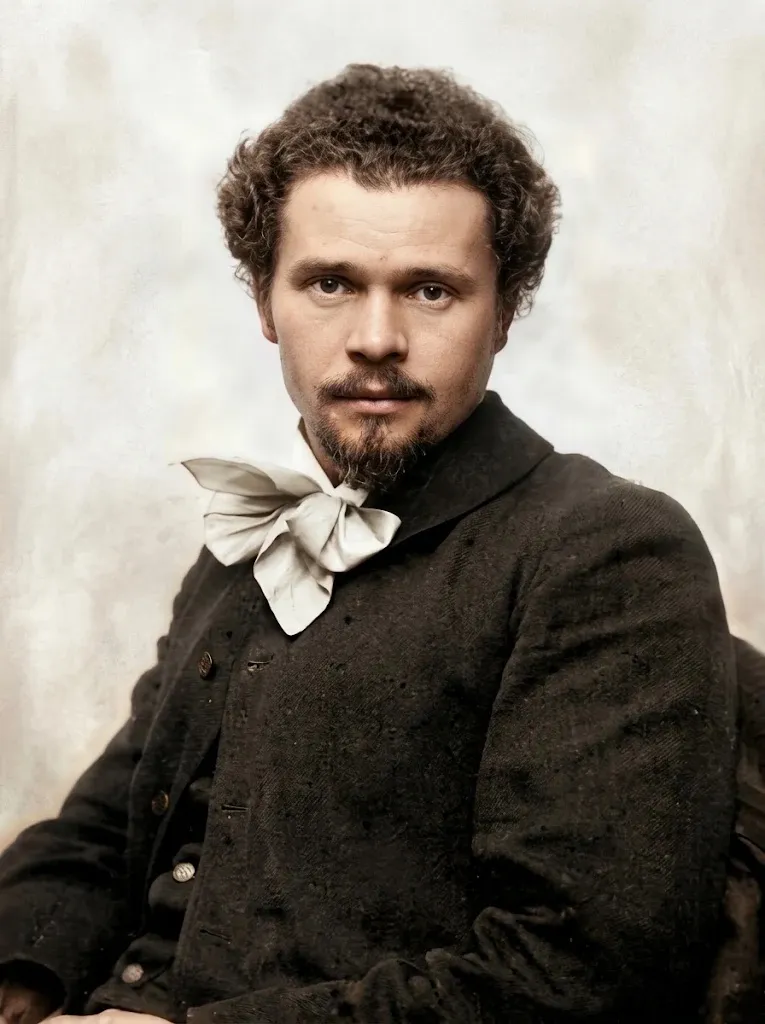
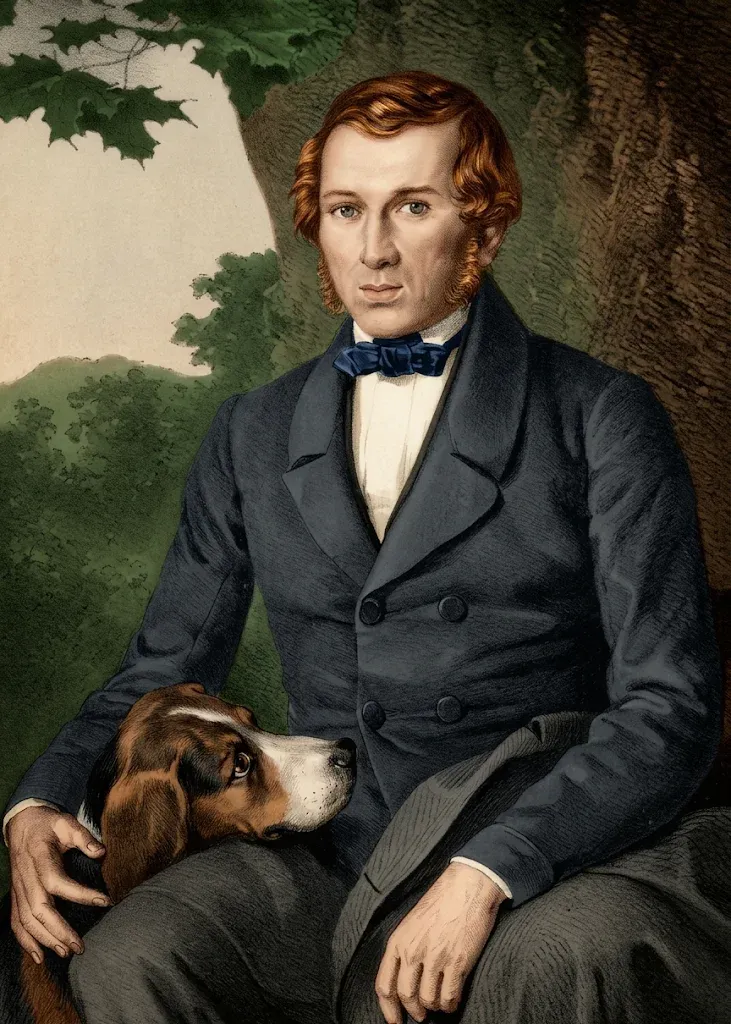
In 1911 Ivan Trush painted the best-known portrait of Shashkevych. No portrait from his lifetime survives, so the artist’s sitter was a priest, Teodozii Lezhohubskyi, who contemporaries said looked like Markiian.
Why it matters today
Shashkevych’s slim Nymph showed Galicia that Ukrainian could carry poetry, scholarship and sermons, though he himself lived only 31 years. His conviction that the people of Galicia, Bukovyna and Transcarpathia were one people with all Ukrainians outlived both the bans and the censors. Mykhailo Verbytskyi, who wrote the music of Ukraine’s national anthem, set his poems to music. Today the Shashkevych family’s estate in Pidlyssia is a museum, and there is a Shashkevych Institute in Winnipeg, Canada.