1893–1933
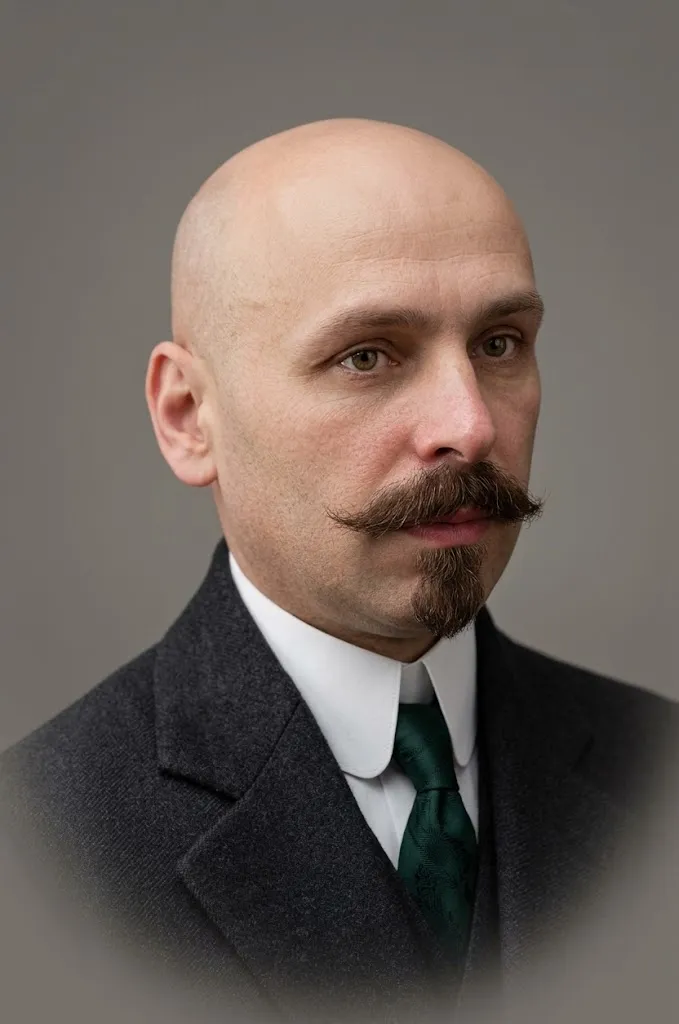
Mykola Khvylovy
Voice of the Executed Renaissance
His slogan “Away from Moscow!” alarmed the Kremlin so much that Stalin warned against it in a letter. Mykola Khvylovy, a writer and pamphleteer of the 1920s, urged Ukrainian culture to look to Europe and became a symbol of the Executed Renaissance.
Key accomplishments
- The short-story collections Blue Etudes and Autumn, and the story “I (Romance)”
- Guiding spirit and a co-founder of the literary organization VAPLITE (1925)
- Pamphlets of 1925–1926 calling for a “psychological Europe”
The slogan Stalin noticed
Can a few pamphlets become the Kremlin’s business? With Mykola Khvylovy, they did. In pamphlets of 1925–1926 he urged Ukrainian culture to look not to Moscow but to a “psychological Europe”. His slogan “Away from Moscow!” stirred up the whole Ukrainian literary world, and Stalin, in a letter to Lazar Kaganovich, warned the party against Khvylovy’s “Western orientation”, calling it bourgeois nationalism.
From revolutionary to rebel
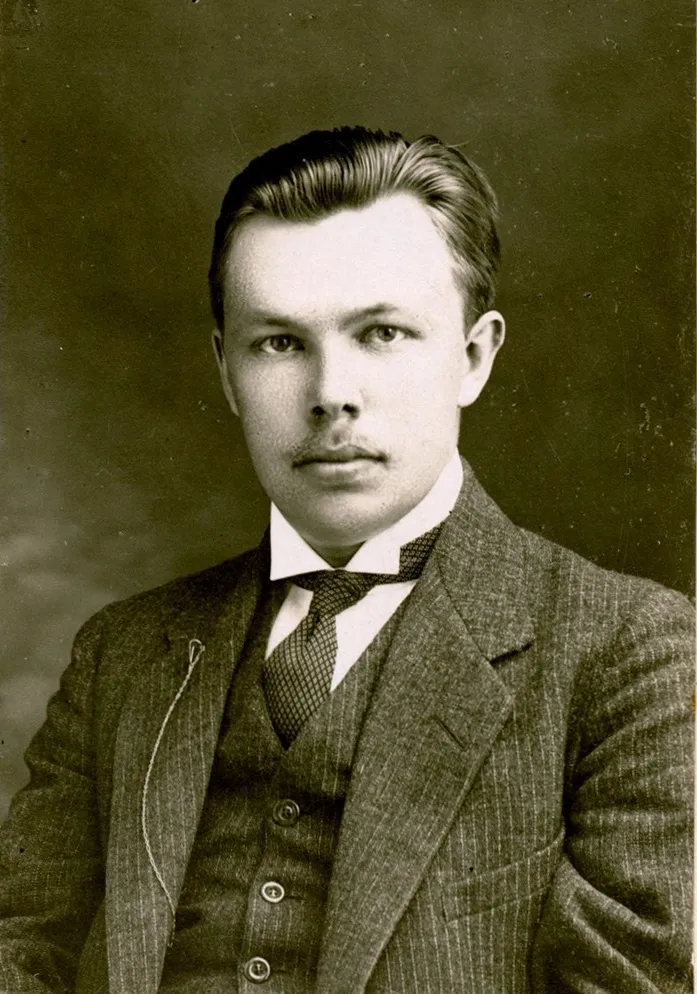
Mykola Fitilov was born in 1893 in Trostianets in Slobozhanshchyna (Sloboda Ukraine). He fought in the First World War, and in 1919 he joined the Communist Party, believing in the ideals of the revolution. In the early 1920s he settled in Kharkiv, then the capital of Soviet Ukraine. Critics noticed his short stories in Blue Etudes and Autumn at once, and young writers took up his bold style. The Free Academy of Proletarian Literature (VAPLITE) formed around him, with Khvylovy as its guiding spirit.
Retreat under pressure
The authorities kept up the pressure, and Khvylovy gave ground: in 1927 he left VAPLITE, and in January 1928, in an open letter, he renounced the slogan “Away from Moscow!”. Yet after returning from abroad he founded the journal Literaturnyi yarmarok, which carried on VAPLITE’s line. By the early 1930s he had almost no way left to write and publish. In the spring of 1933 he saw the Holodomor in the Poltava region with his own eyes. After the arrest of his friend, the writer Mykhailo Yalovyi, Khvylovy took his own life on 13 May 1933. His contemporaries saw his death as a protest.
Why he is read today
Right after his death his works, and even his name, were banned. Today Khvylovy is a symbol of the Executed Renaissance, the generation of artists of the 1920s–1930s destroyed by the Soviet authorities. And his idea of a European path for Ukraine sounds relevant again.