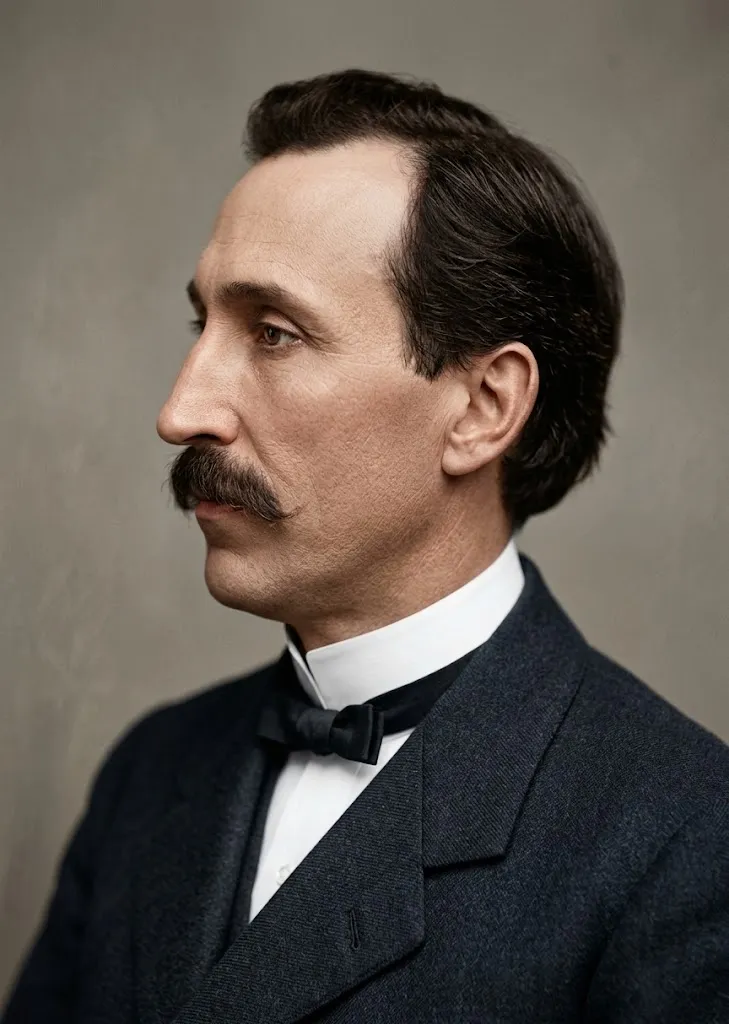
1840–1904
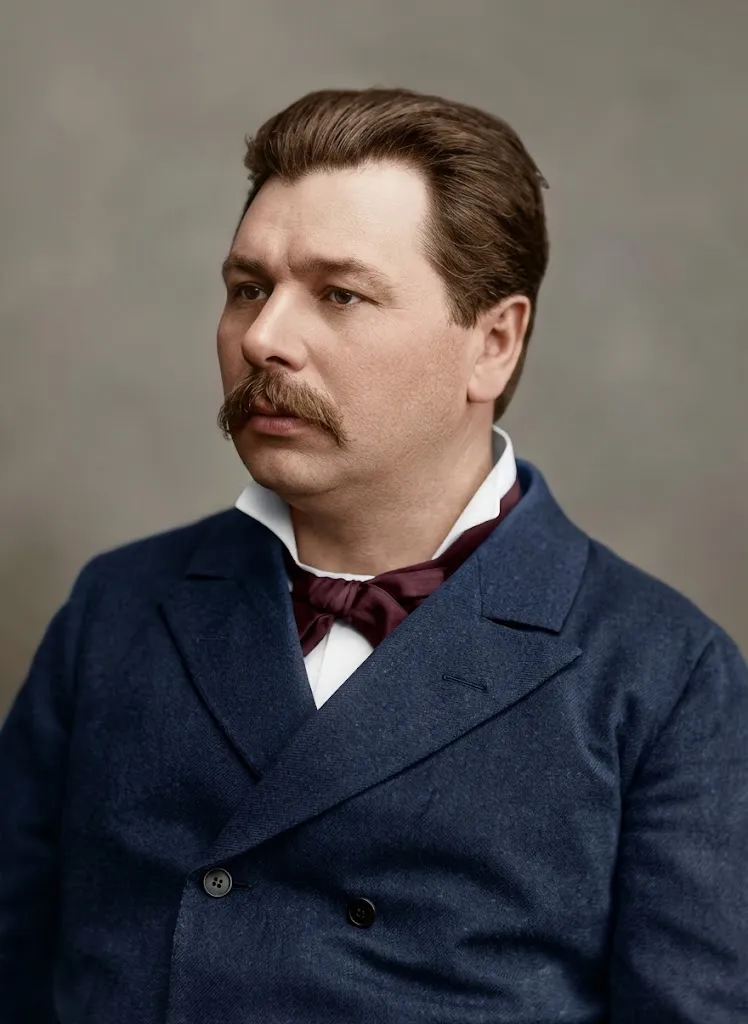
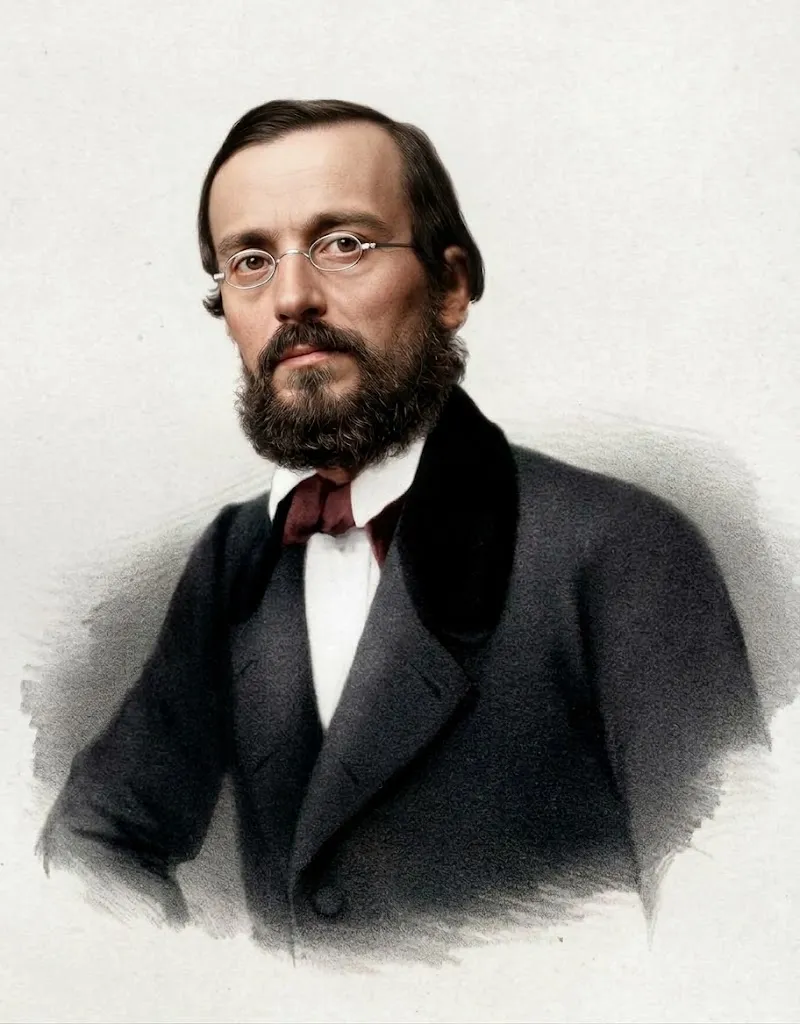
Mykhailo Starytskyi
Playwright, head of the Coryphaei troupe
He sold his estate so that Ukrainian actors could have an orchestra and costumes, and paid them more than the imperial theatre did. Mykhailo Starytskyi was a playwright and poet, the author of Chasing Two Hares and of the poem behind the song “What a Moonlit Night”.
Key accomplishments
- Led the first professional Ukrainian troupe (1883–1885), then troupes of his own
- Co-founded the Society of Ukrainian Stage Actors in Kyiv with Mykola Lysenko (1872)
- Libretti for Lysenko’s operas The Black Sea Cossacks, Christmas Night, Taras Bulba and The Drowned Maiden
- The plays Chasing Two Hares, It Was Not Fated, Don’t Go to the Evening Party, Hryts, Destiny, Marusia Bohuslavka and Bohdan Khmelnytskyi
- The poem The Challenge (“What a moonlit night, O Lord, what a starry one”), the basis of a well-known song
- Translation of Shakespeare’s Hamlet (1882)
- The historical novels The Youth of Mazepa and The Bandit Karmeliuk
Where “What a Moonlit Night” came from
“What a moonlit night, O Lord, what a starry one”: generations of Ukrainians know this song, and in 2024 Artem Pivovarov and KOLA recorded a new version of it. It grew out of a poem by Mykhailo Starytskyi called The Challenge. The story goes that it was inspired by Stepanyda, a village girl the young Starytskyi saw at an evening party and fell for. She was already engaged to someone else.
The orphan who grew up with Lysenko
Starytskyi was born in the village of Klishchyntsi in the Poltava region, now Cherkasy Oblast, into a family of minor landowners. The usual date given is 14 December 1840. But in 2019 a researcher found a copy of his baptism record with a different one: 14 November 1839.
By the age of twelve Mykhailo had lost both parents. His mother came from the Lysenko family, and the boy was taken in by Vitalii Lysenko, father of the future composer Mykola Lysenko. Mykhailo and Mykola, second cousins and almost the same age, became lifelong friends. They studied at university together and opened Sunday schools with their own money. Later Starytskyi married Mykola’s sister, Sofiia.
Songs and operas for two
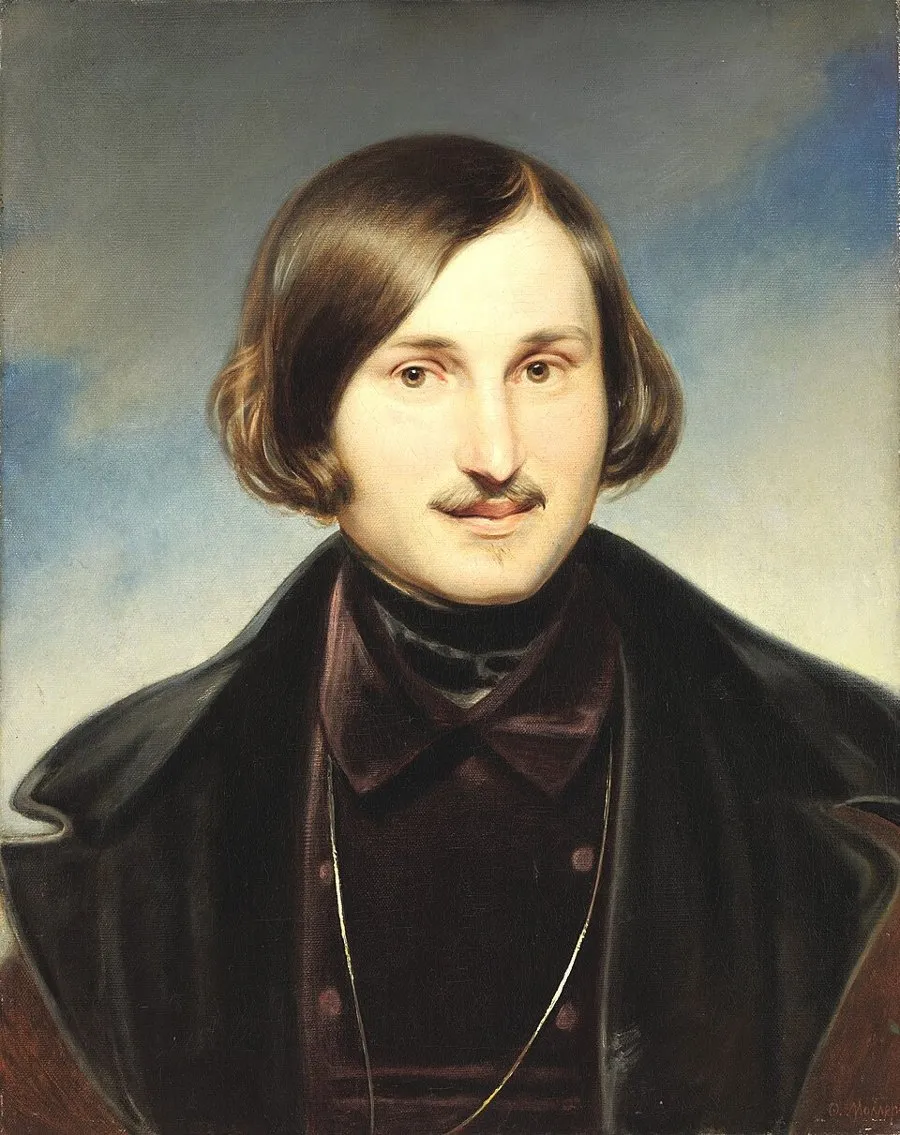
In Kyiv the cousins worked side by side. Starytskyi wrote down folk songs, and Lysenko arranged them. In 1872 they founded the Society of Ukrainian Stage Actors together. Starytskyi wrote libretti for Lysenko’s operas, among them Taras Bulba and Christmas Night, after Gogol.
The blacksmith of words
Picture a cartoon: a blacksmith swings his hammer, and words fly off the anvil. That is how the artist Porfyrii Martynovych drew Starytskyi, together with Olena Pchilka: the two were the writers most often attacked for coining words. In 1882 Mykola Kostomarov savaged Starytskyi in a review for using words he did not know. That same year Starytskyi’s Hamlet came out, and the word «мрія», “dream”, appears in it again and again.
An estate for an orchestra and costumes
In 1883 Starytskyi took charge of the first professional Ukrainian troupe, which Marko Kropyvnytskyi had founded shortly before. To give it the best of everything, Starytskyi sold his estate in Podillia. The troupe gained its own orchestra and fine sets and costumes, and its actors were paid more than those of the imperial theatre.
In 1885 the troupe split, and Starytskyi gathered a new one from young actors. In 1886–1887 it toured Moscow and St Petersburg to great success, and later Warsaw and Tiflis. Until the mid-1890s he ran troupes, including Mykola Sadovskyi’s, until lack of money and illness drove him from the stage.
From Chasing Two Hares to Bohdan Khmelnytskyi
Starytskyi wrote and reworked dozens of plays. He built the comedy Chasing Two Hares on Ivan Nechui-Levytskyi’s play Na Kozhumiakakh. His dramas tell of ordinary people’s lives and of history, from Destiny, dedicated to Mariia Zankovetska, to Bohdan Khmelnytskyi. Late in life he turned to historical novels, such as The Youth of Mazepa and The Bandit Karmeliuk.
He died in Kyiv in 1904. His daughter Liudmyla Starytska-Cherniakhivska became a writer and playwright.
A theatre built with his own money
Starytskyi gave Ukrainian theatre not only his talent but his own money, at a time when Ukrainian performances were barely tolerated. Thanks to that, the first professional troupe had an orchestra, sets and costumes, and it carried the Ukrainian word to the great cities of the empire. His libretti gave Lysenko’s operas their words, and his poem is still sung as a folk song. He enriched the language boldly, though he was mocked for it, and «мрія» took root. He showed that culture is built with a pen and with one’s own means.