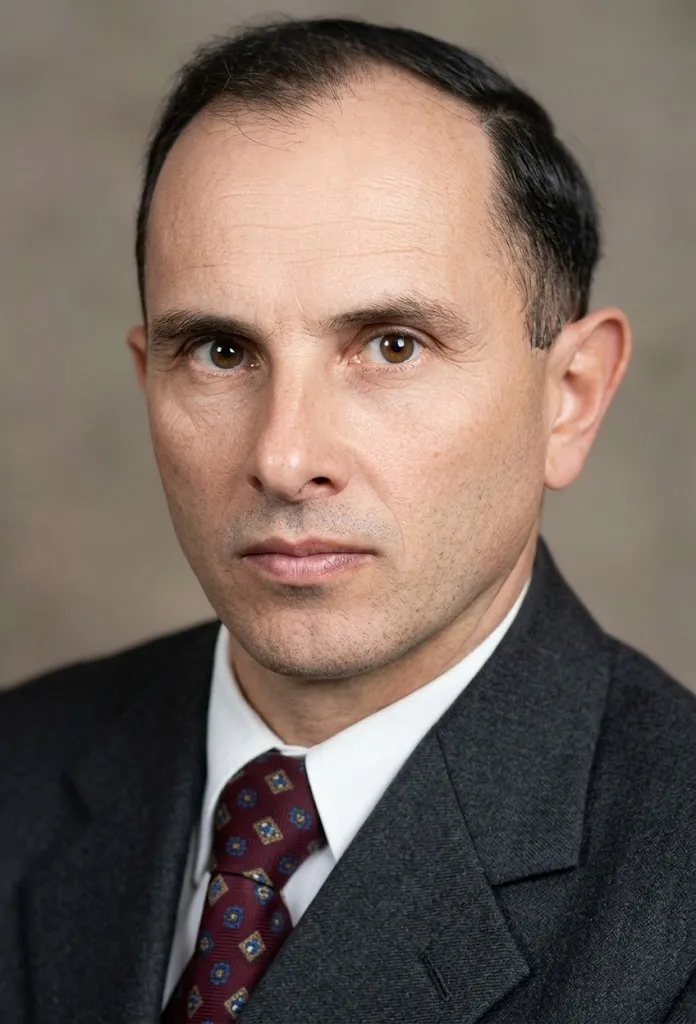
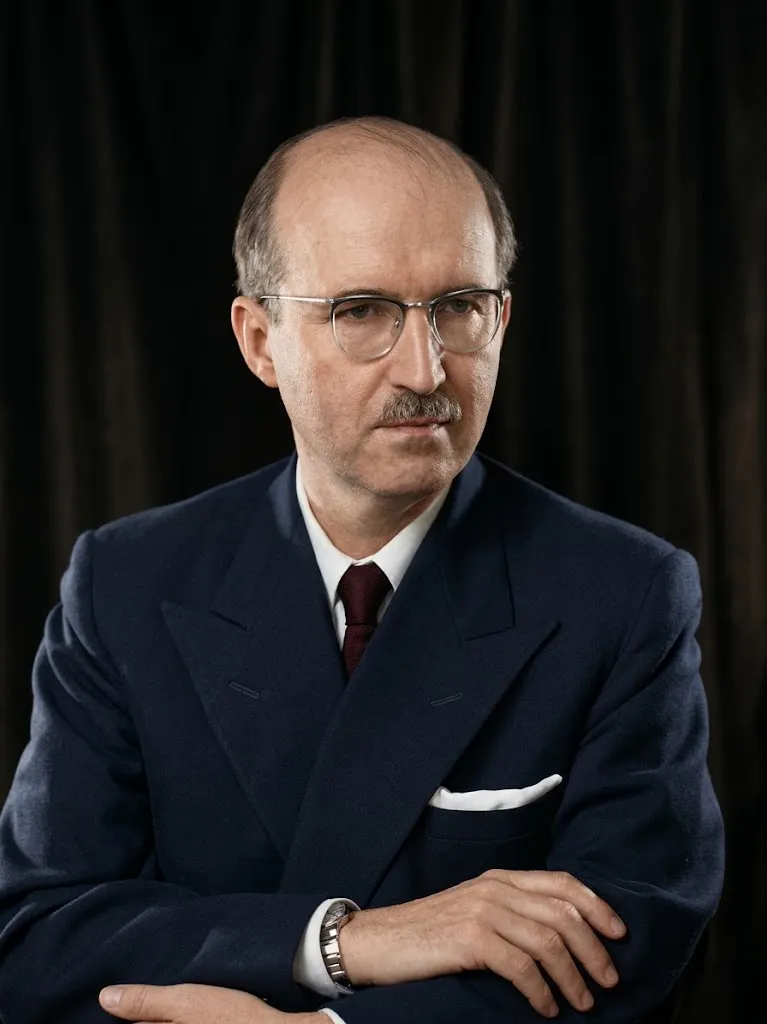
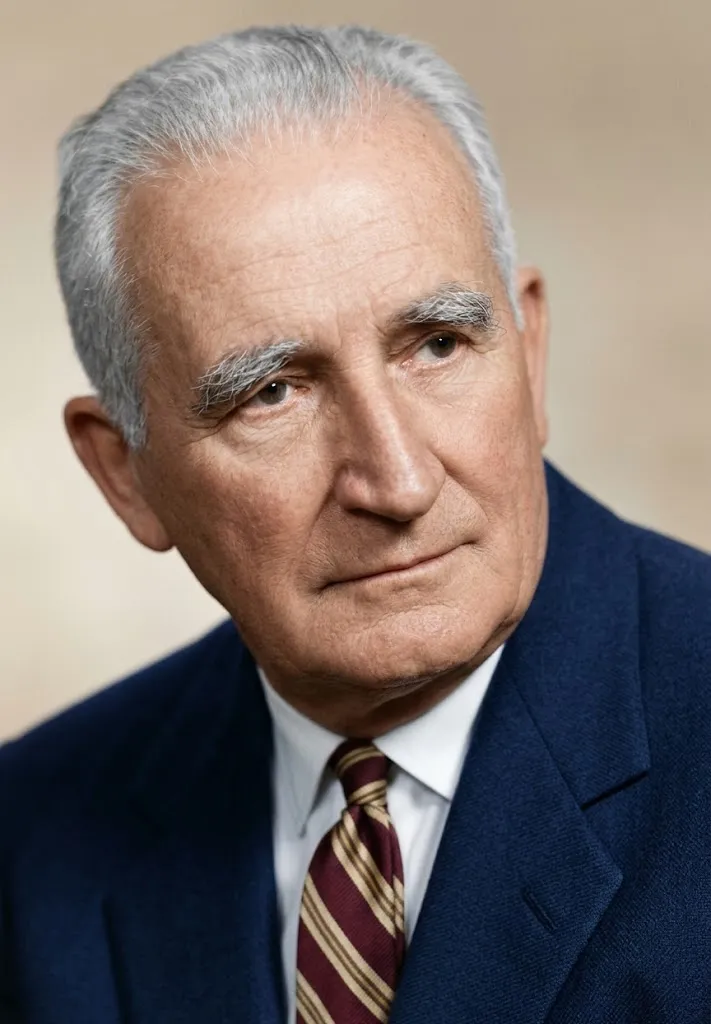
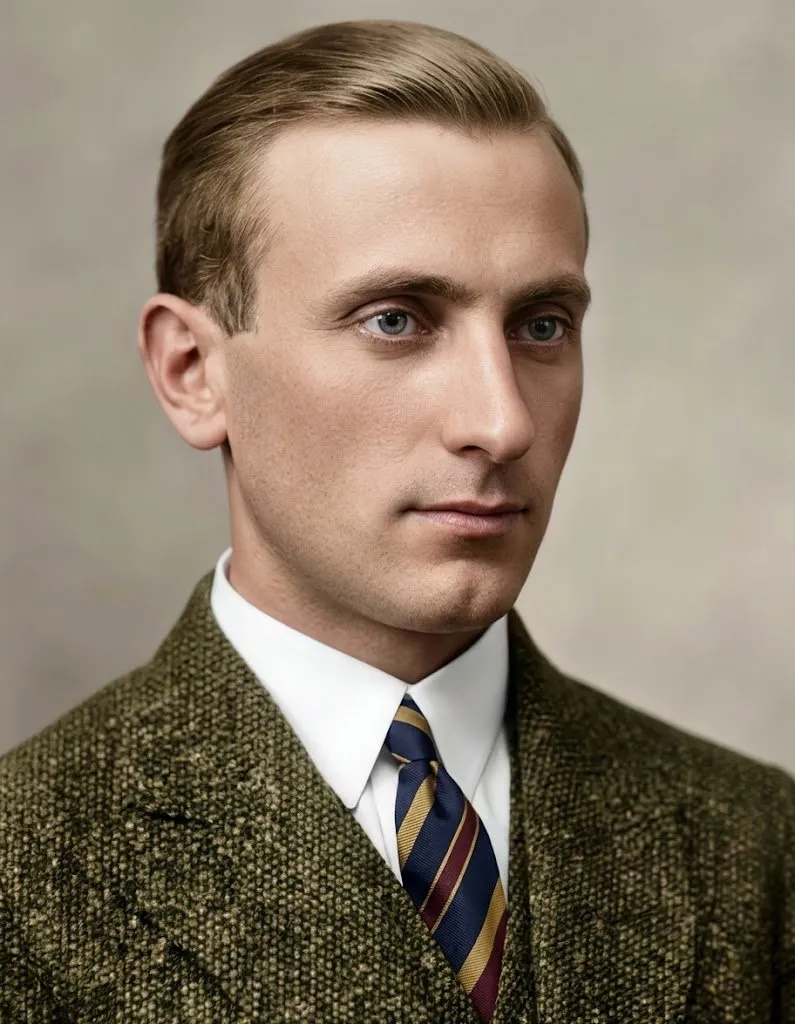
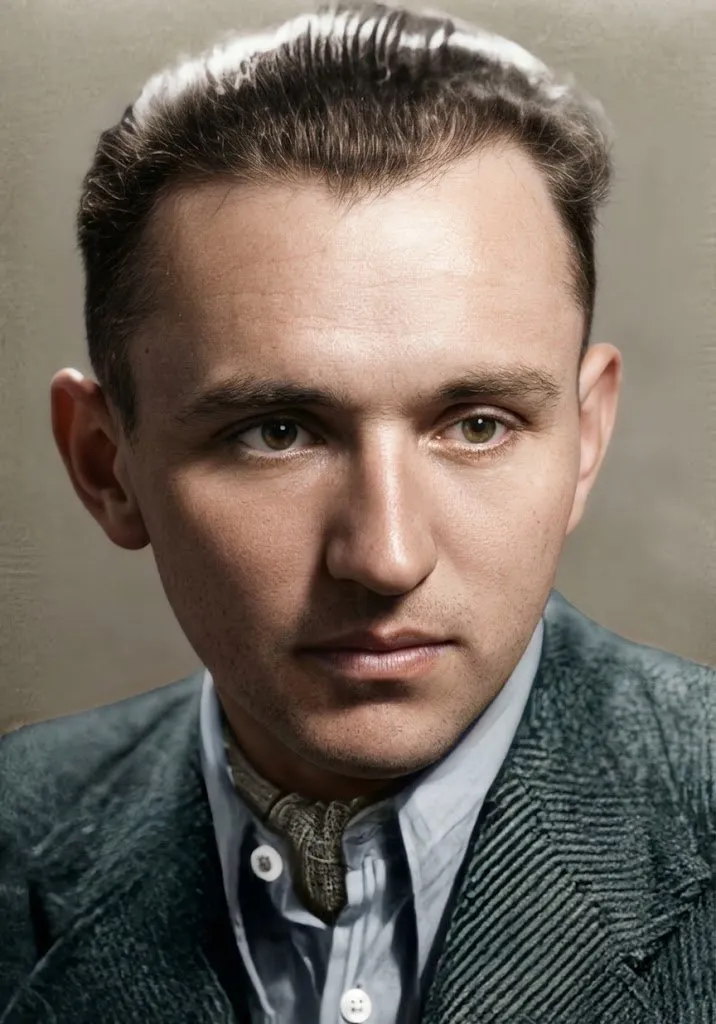
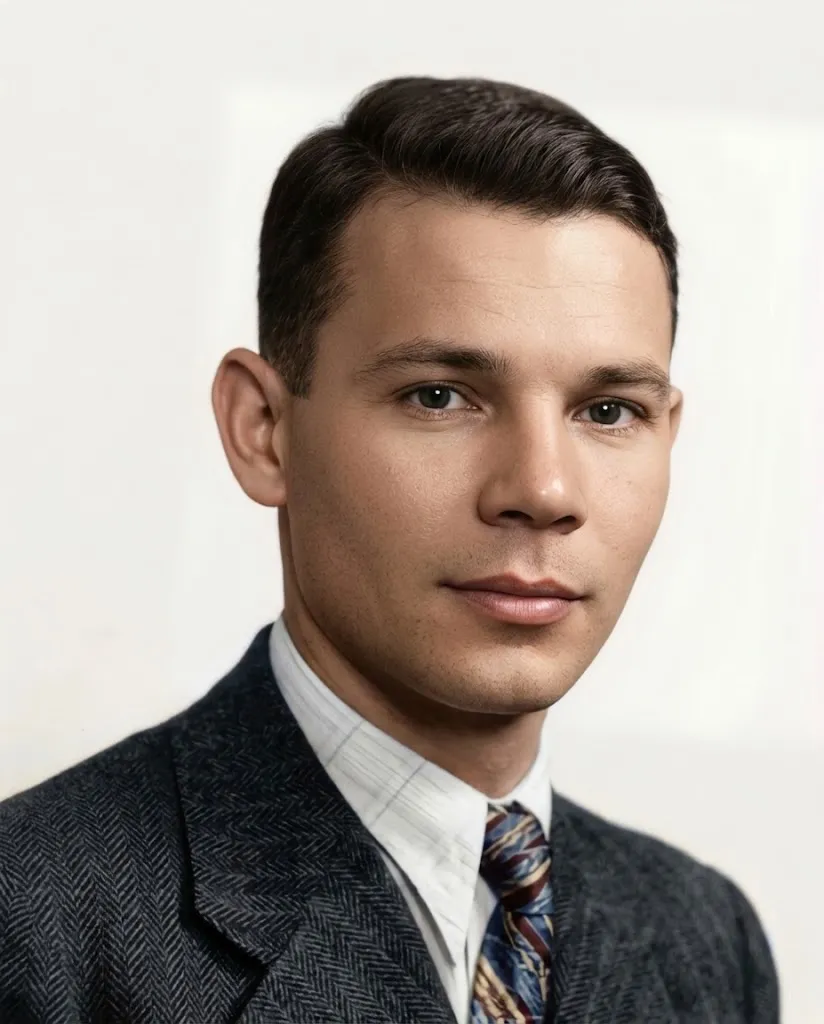
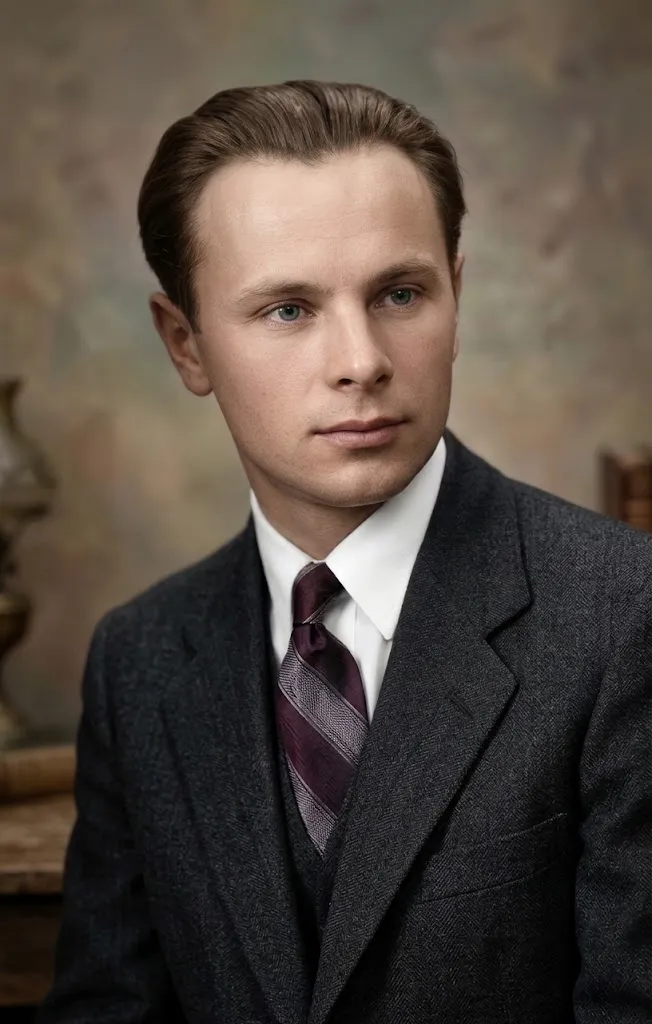
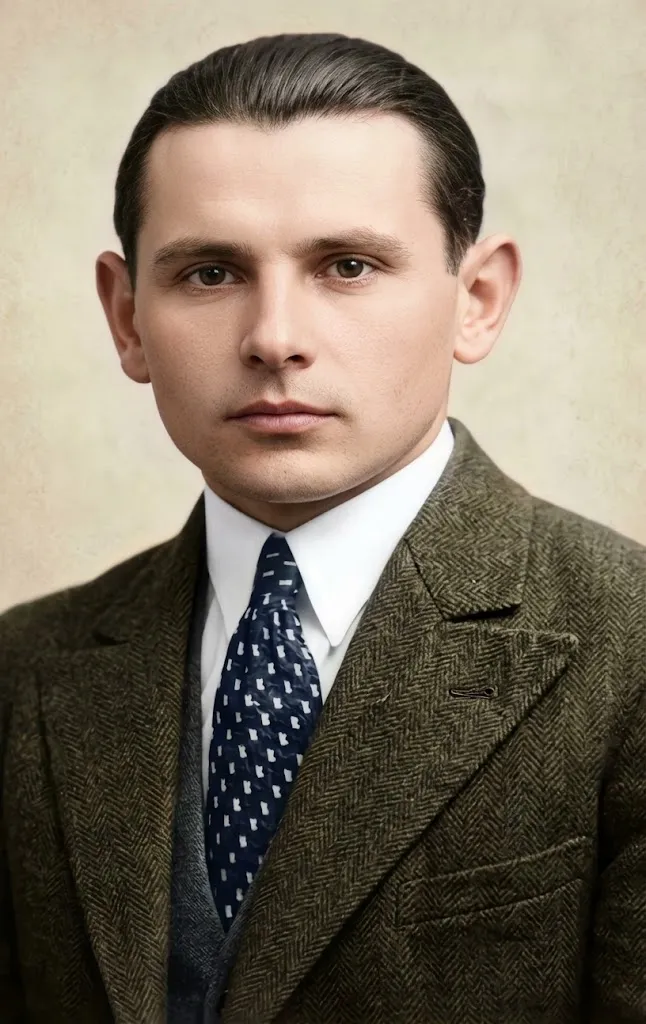
Lev Rebet
OUN leader, lawyer and writer
He argued that even an enslaved Ukraine was, in law, a state. Lev Rebet, a lawyer and OUN leader, took over the Ukrainian State Administration in 1941 after Stetsko’s arrest, survived Auschwitz and in exile broke with Bandera. In 1957 a KGB agent killed him.
Key accomplishments
- Head of the OUN’s regional executive in western Ukraine (until 1938)
- In 1941, after Yaroslav Stetsko’s arrest, acting head of the Ukrainian State Administration in Lviv
- Professor of constitutional law at the Ukrainian Free University in Munich, author of “The Formation of the Ukrainian Nation” (1951)
- In 1954, with Zynovii Matla, led a separate wing of the OUN, known from 1956 as the OUN Abroad
Can an enslaved country still be a state?
Lev Rebet thought it could. Soviet Ukraine, he wrote, was enslaved, but in law it was a sovereign state and a member of the UN, so it already had the right to independence. Rebet was a lawyer and one of the leaders of the Organization of Ukrainian Nationalists (OUN). He stood for evolution, gradual change, rather than revolution, and on this he parted ways with Stepan Bandera.
A boy from Stryi
He joined the underground at 15. Lev Rebet was born on 3 March 1912 in Stryi, in the Lviv region, the son of a post office official. At school he was in Plast, the Ukrainian scouts; at 15 he joined the underground Ukrainian Military Organization, and in 1929 the OUN. The very next year he was leading the OUN in the Stryi district. The Polish authorities arrested him again and again, and in all he spent about two and a half years in prisons in Stryi and Lviv. In the second half of the 1930s Rebet headed the OUN’s regional executive in western Ukraine, and in 1938 he graduated in law from Lviv University.
Summer 1941 and Auschwitz
Kraków became his base after Poland was carved up in 1939: there Rebet joined the OUN’s Central Executive and ran its intelligence work. When the OUN split in 1940, Rebet sided with Bandera rather than Andrii Melnyk. On 30 June 1941 the Act of Restoration of the Ukrainian State was proclaimed in Lviv, and Rebet became one of the deputies of Yaroslav Stetsko, head of the Ukrainian State Administration. The Germans refused to recognize the Act and that summer arrested Stetsko and Bandera. Rebet then took over their duties in Lviv. On 14 September 1941 the Nazis arrested him too, and until 1944 he was a prisoner in the Auschwitz concentration camp.
A scholar in exile
Munich became his home after the war. He was chief judge of the OUN abroad, in 1949 earned a doctorate with a thesis on “The State and the Nation”, and taught constitutional law at the Ukrainian Free University, where he became a professor. He wrote about how the Ukrainian nation took shape and about what a nation and a state are: his “Theory of the Nation” came out in 1955, and his book “Lights and Shadows of the OUN” only after his death, in 1964. From 1955 he edited the journal “Ukrainskyi Samostiinyk”. He wrote most of it himself, under various pen names, because there was no one else to write it. The family was poor, and he mended his own shoes. Working beside him was his wife, Dariia Rebet, herself a prominent OUN figure.
The break with Bandera
A more democratic OUN was what Rebet wanted, as its own programme had promised back in 1943: freedom of speech, of the press and of belief, and rights for national minorities. Bandera saw such changes as a retreat from nationalism. In 1954 Rebet and Zynovii Matla left the OUN’s foreign units and set up a separate wing; because it had two leaders it was nicknamed the “dviikari”, the “pair”, and from 1956 it was called the OUN Abroad.
Murder in Munich
Kidnapping Rebet was something Soviet intelligence tried several times. The agent Bohdan Stashynskyi was even told to find out whether a man at Rebet’s journal could slip something into his food, but the man was not close to the editor, and the idea was dropped. On 12 October 1957 Rebet was found dead on the stairs of the Munich building that housed his journal’s office. The doctors concluded that his heart had stopped. In fact he had been killed by Stashynskyi, who sprayed poison into his face from a special device hidden in a newspaper. Rebet was 45. The truth came out only in 1961, when Stashynskyi fled to the West and confessed to killing both Rebet and Bandera. For Rebet the KGB had rewarded him with a Contax camera; for Bandera, with the Order of the Red Banner. In 1962 a court in Karlsruhe sentenced him to eight years in prison, and placed the main blame on those in Moscow who had given the order. In 2010 Lev and Dariia Rebet were reburied in Lviv’s Lychakiv Cemetery.
Debates and assessments
The 1954 split is judged in different ways. Rebet’s supporters and some historians see it as an attempt to make the OUN democratic and to break with an authoritarian leadership. Bandera’s circle saw the changes as Marxist influence, and some of his followers suspected Soviet intelligence of having a hand in the split. Some scholars write that Rebet broke with Bandera over the latter’s attachment to fascist ideas. Others note that the “dviikari” were not fully democratic either, since underground work demanded secrecy. By one assessment, the killings of Rebet and Bandera were meant to deepen the feud between the OUN’s wings, since at first each side suspected the other.
Why it matters today
Lev Rebet fought for Ukraine not only in the underground but with ideas: as a lawyer he made the case that Ukraine already had the right to a state of its own. He believed a free Ukraine had to be a democratic one, and for that he broke with Bandera. His life shows that independence can be fought for with a book, a journal and an argument. And the fact that the KGB killed him first, before Bandera, shows how dangerous a clear idea can be to an empire.