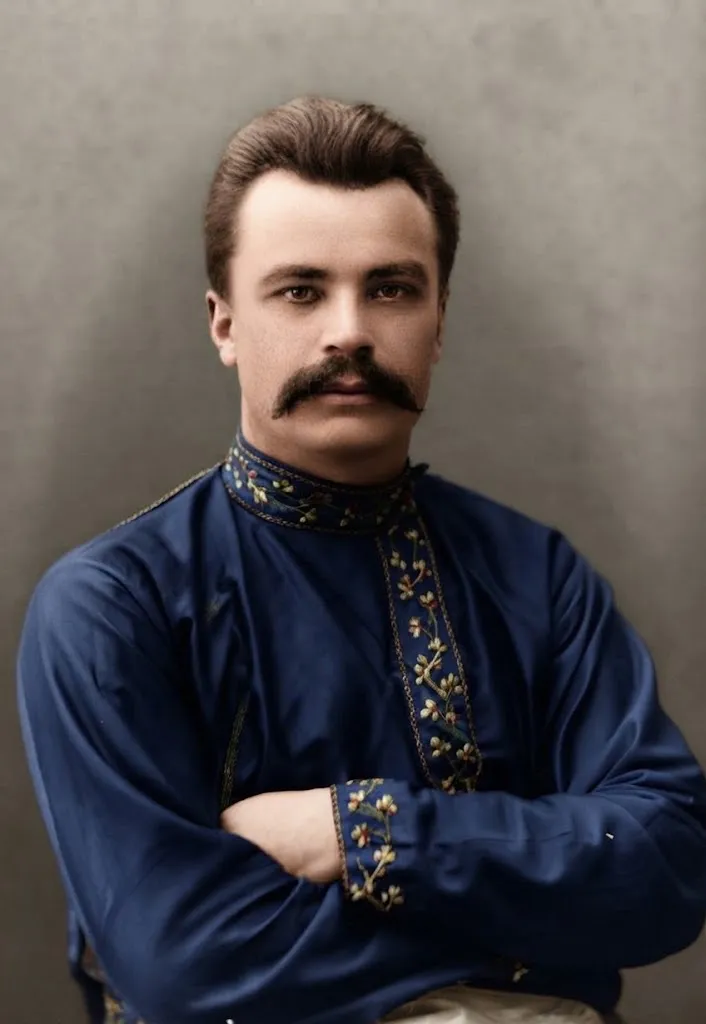
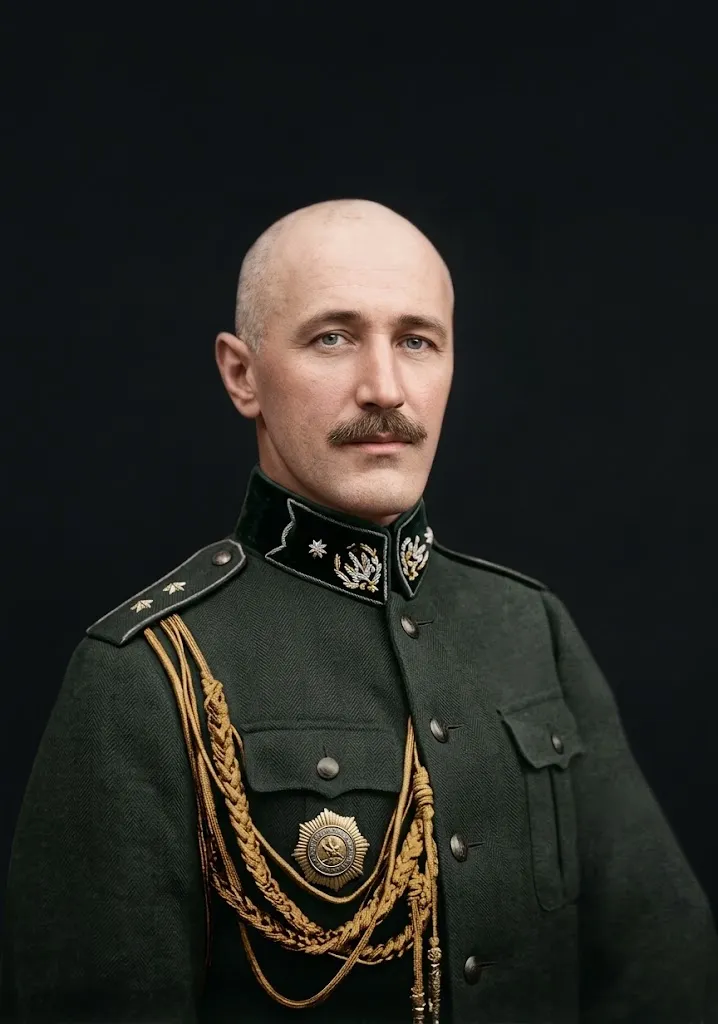
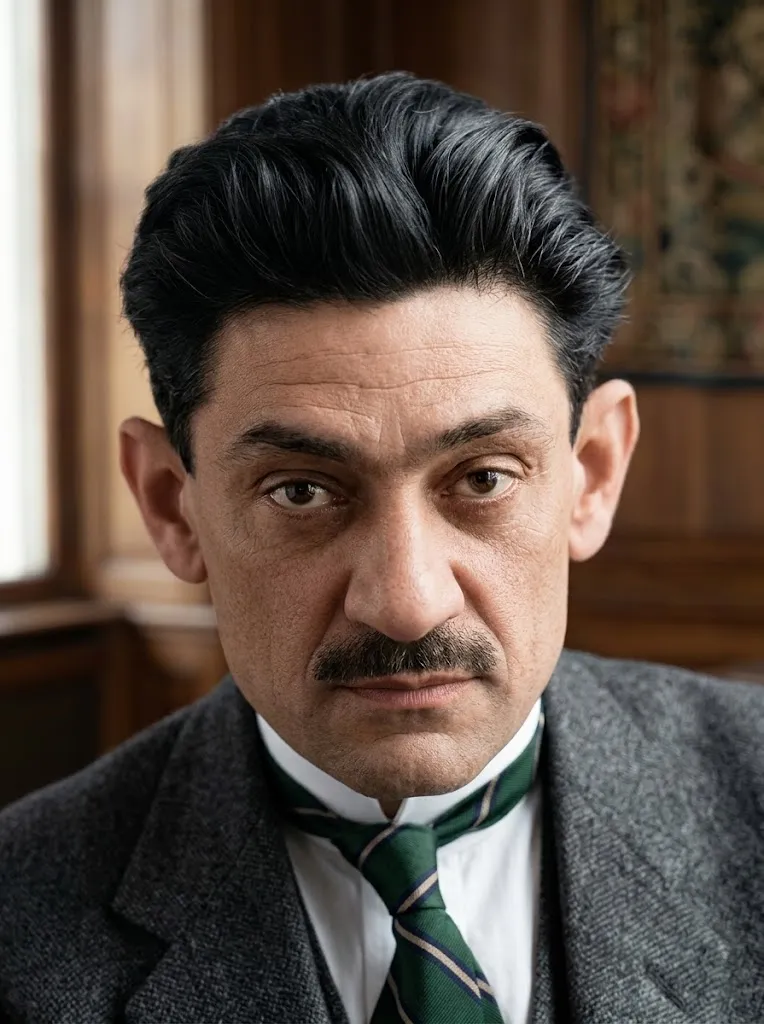
Lonhyn Tsehelskyi
Lawyer who helped build the ZUNR
In 1900 a young lawyer called for an independent Ukrainian state. Eighteen years later Lonhyn Tsehelskyi wrote the declaration of the Ukrainian National Rada, became a state secretary of the ZUNR, drafted its treaty of union with the UNR and read out the resolution on it in Kyiv’s St Sophia Square.
Key accomplishments
- Author of the declaration and manifesto of the Ukrainian National Rada (October 1918)
- Member of the commission that led the takeover of Lviv on 1 November 1918; State Secretary for Internal Affairs of the ZUNR
- Author of the preliminary treaty on the union of the ZUNR and the UNR, which he signed in Fastiv on 1 December 1918
- Read out the Ukrainian National Rada’s resolution on the union in St Sophia Square, Kyiv, on 22 January 1919
- Member of the Austrian parliament and the Galician Diet; editor of the newspaper Dilo
- Co-founder of the Ukrainian Congress Committee of America (1940); editor of the newspaper Ameryka (from 1943)
A dream written down
In the summer of 1900, at a congress of Ukrainian students in Lviv, a young lawyer called for an independent Ukrainian state. Eighteen years later Lonhyn Tsehelskyi was writing that state’s first documents himself.
He was born in 1875 in Kaminka-Strumylova, in Galicia, into a priest’s family. He studied law at Lviv University, helped found the student society Akademichna Hromada and co-edited the journal Moloda Ukraina (Young Ukraine). While still a student, at a student congress in England, he spoke out sharply against a plan to hand Eastern Galicia to the russian empire and insulted the tsar. He was deported from Britain and arrested at the Austrian border for “insulting the majesty of a foreign monarch”. No punishment followed, but people began to talk about the young Galician.
In 1900 he published Mykola Mikhnovskyi’s pamphlet Samostiina Ukraina (Independent Ukraine), and in 1901 his own book, Rus-Ukraine and Muscovy-Russia, which shaped Ukrainians both in Galicia and in russian-ruled Ukraine. Its core idea: Ukraine has a right to a state of its own.
Newspapers, parliament and riflemen
After a short spell as a practising lawyer, Tsehelskyi chose politics. In 1902 he was among the organizers of peasant strikes in Galicia, and later he edited the newspaper Dilo. In 1907 he ran for the Austrian parliament on a joint ticket with the Zionists and became a substitute member, taking the seat in 1909; in 1911 he won the Jarosław district himself, defeating Count Tarnowski. In 1913 he was also elected to the Galician Diet. When the First World War began, he helped create the Ukrainian Sich Riflemen legion and joined its Combat Board.
On Austro-Hungarian missions he travelled to Istanbul and Stockholm. In Istanbul he met several times with the war minister Enver Pasha, one of the Ottoman leaders, after which Rus-Ukraine and Muscovy-Russia was reprinted there in a large print run. And in 1915 his book Ukraine, Sweden’s Forgotten Ally came out in Swedish in Stockholm.
From Lviv to St Sophia Square
In October 1918 deputies from Galicia and Bukovyna formed the Ukrainian National Rada in Lviv, and Tsehelskyi wrote its solemn declaration. He sat on the commission that led the takeover of Lviv on 1 November, and from 9 November he was State Secretary for Internal Affairs of the West Ukrainian People’s Republic (ZUNR).
He also drafted the treaty of union. On 1 December 1918 in Fastiv, Tsehelskyi and Dmytro Levytskyi signed it for the ZUNR, and among those who signed for the Directorate of the Ukrainian People’s Republic (UNR) was Symon Petliura. Then on 22 January 1919, in St Sophia Square in Kyiv, in front of thousands of people, he read out the Ukrainian National Rada’s resolution on the union. This was how the Act of Unity was proclaimed. Around the same time he was made deputy foreign minister of the UNR.
Ukraine’s voice in America
In 1920 Yevhen Petrushevych sent Tsehelskyi to the United States as the ZUNR’s representative. In 1921 he agreed a loan with an American-Canadian businessman: ZUNR bonds worth millions of dollars, secured on the land, forests and mines of the future independent state. But Petrushevych did not approve the deal. Tsehelskyi stayed in the US, settled in Philadelphia and edited Ukrainian newspapers, from 1943 Ameryka, and wrote a book on Metropolitan Andrei Sheptytskyi (1937). In 1940 he was one of the founders of the Ukrainian Congress Committee of America, which brought Ukrainian organizations in the US together. He died in Philadelphia in 1950, at his desk in the newspaper’s office.
Why it matters today
Tsehelskyi went from a student’s dream of an independent Ukraine to the documents that built it, and made sure that unity would rest on law, not on feeling alone. The day he read out the resolution on the union in St Sophia Square is marked by Ukraine every year as the Day of Unity. In exile he helped bring Ukrainian Americans together so they could speak for Ukraine with one voice. His life shows that a state begins with an idea someone dares to write down.