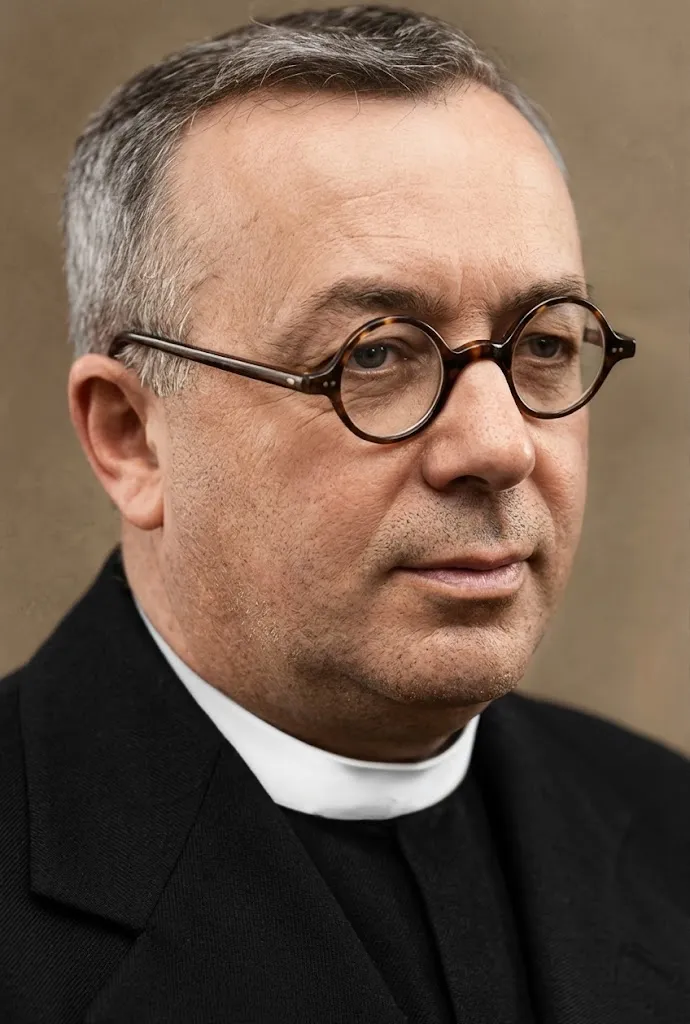
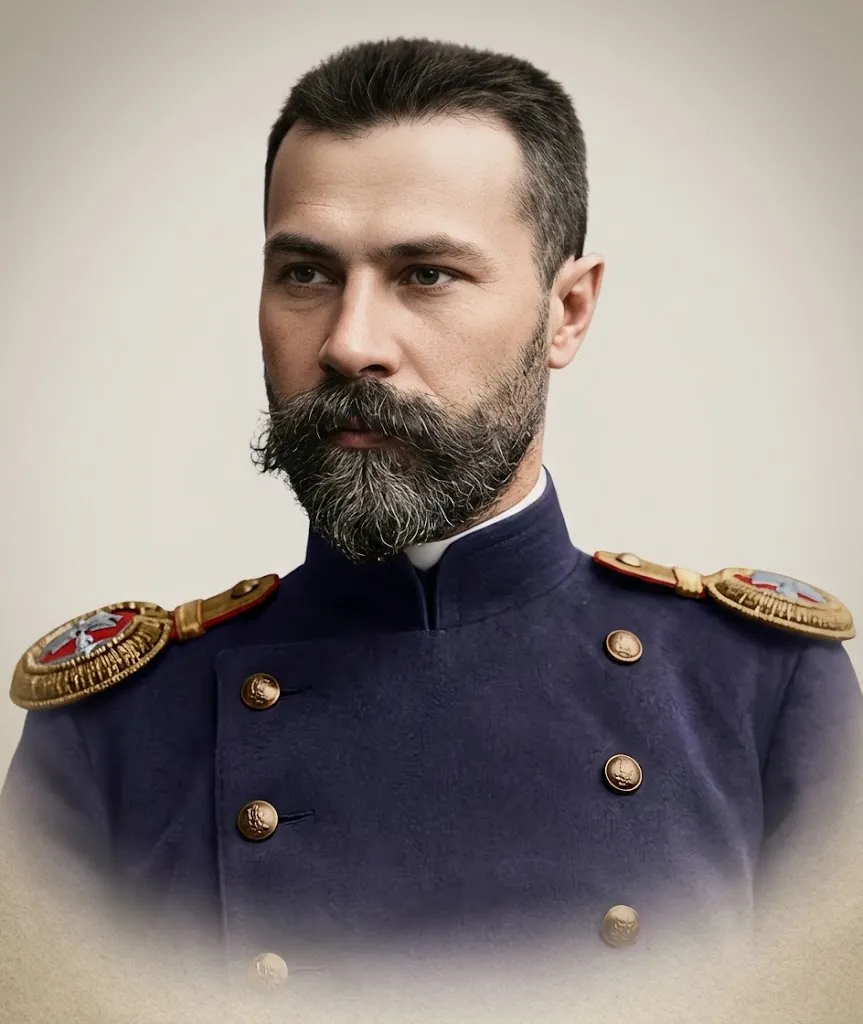
Volodymyr Chekhivskyi
UNR prime minister, church leader
A theologian became prime minister, and within a week his government passed a law freeing the Ukrainian church from Moscow. Volodymyr Chekhivskyi led the UNR government when the Act of Union was proclaimed, then helped build the Ukrainian Autocephalous Church. He was shot at Sandarmokh in 1937.
Key accomplishments
- Chairman of the Council of People's Ministers and foreign minister of the UNR (26 December 1918 - 11 February 1919); built the foreign ministry's staff
- Initiated the Directorate's law of 1 January 1919 on the autocephaly of the Ukrainian Orthodox Church
- A leader of the 1918 uprising against the Hetman, head of the Ukrainian Revolutionary Committee
- Adviser to Metropolitan Vasyl Lypkivskyi and head of the ideological commission of the Ukrainian Autocephalous Orthodox Church; chaired its Second All-Ukrainian Sobor (1927)
- Deputy of the First State Duma of the russian empire (1906), member of the Central Rada (1917)
The theologian who went into politics
What does a theology degree have to do with a prime minister’s chair? Volodymyr Chekhivskyi had both. He was born in 1876 in the village of Horokhuvatka near Kyiv, into a priest’s family. While still a student, at twenty, he joined the Ukrainian socialist movement. In 1900 he graduated from the Kyiv Theological Academy as a candidate of theology and went on to work in church seminaries and schools. In 1906 he was elected to the First State Duma of the russian empire, and after it was dissolved he was exiled to Vologda.
Odesa and the revolution
After his exile Chekhivskyi settled in Odesa. He taught, worked in the Prosvita society and edited the newspaper Ukrainske slovo. In 1917 he was elected to the Central Rada, and in the autumn he headed the Odesa revolutionary committee. In December 1918 he led the Ukrainian Revolutionary Committee and became one of the leaders of the uprising against the Hetman.
Seven weeks at the head of government
Chekhivskyi became chairman of the UNR Council of People’s Ministers and foreign minister on 26 December 1918, appointed by the Directorate, chaired by Volodymyr Vynnychenko. On 1 January 1919, on his initiative, the Directorate passed the law on autocephaly: from then on the Ukrainian Orthodox Church was not to depend on the patriarch in Moscow. The law could not be put into practice, because the Directorate soon had to leave Kyiv. On 22 January 1919, while Chekhivskyi led the government, the Act of Union of the UNR and the Western Ukrainian People’s Republic was proclaimed. In foreign policy he argued for an understanding with Bolshevik russia. Disagreeing with the course of Symon Petliura, he resigned on 11 February 1919.
The metropolitan’s adviser
Chekhivskyi did not emigrate. From 1920 he was an adviser to Metropolitan Vasyl Lypkivskyi in the Ukrainian Autocephalous Orthodox Church. He headed its ideological commission, taught future priests at pastoral courses, and in 1927 chaired the church’s Second All-Ukrainian Sobor.
The SVU case and Sandarmokh
Chekhivskyi was arrested on 29 July 1929 in the fabricated case of the “Union for the Liberation of Ukraine” (SVU). In the spring of 1930 he was tried in the Kharkiv opera house together with Serhii Yefremov and 43 other defendants. He was sentenced to death, then the sentence was commuted to ten years in prison. In 1933 he was moved to the Solovki prison. On 9 October 1937 an NKVD “troika” passed a new sentence, and on 3 November Volodymyr Chekhivskyi was shot in the Sandarmokh forest. He was 61.
Debates and assessments
Some scholars see Chekhivskyi as one of the builders of Ukrainian statehood and of the Ukrainian church. Others, while acknowledging his work as head of government, write that his career shows the inexperience, short-sightedness and lack of confidence common to many Ukrainian politicians of the time. Critics also note that he argued for an understanding with Bolshevik russia, and that in 1920 he became one of the leaders of the Ukrainian Communist Party.
Why it matters today
Chekhivskyi led the UNR government for only seven weeks, yet in that time Ukraine declared its church independent of Moscow and was united by the Act of Union. He showed that a state rests not only on an army but also on faith, diplomacy and institutions of its own. The idea he stood for, a church independent of Moscow, is still part of Ukraine’s struggle to be itself. He stands in the long line of Ukrainians who defended the right to their own state and their own church, from the founders of the UNR to those defending Ukraine today.