1947–1984
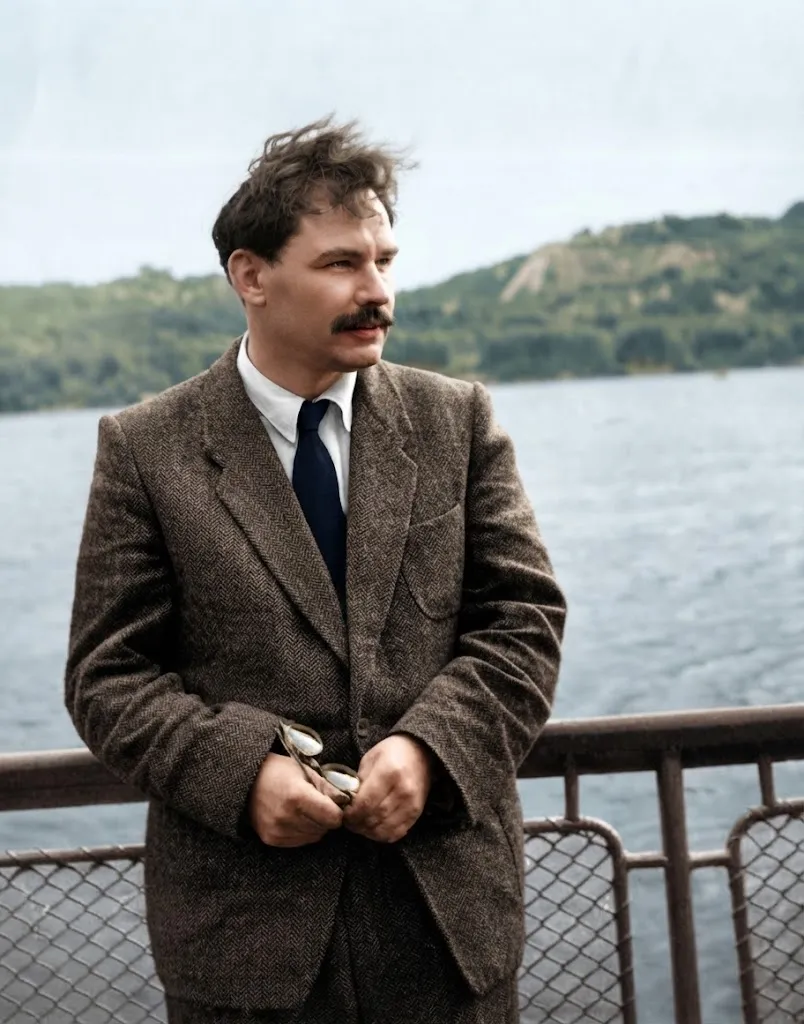
Valerii Marchenko
Journalist, translator, rights defender
In exile in Kazakhstan he translated the US Declaration of Independence into Ukrainian. Valerii Marchenko, a journalist at Literaturna Ukraina and a translator, was sent to Soviet labour camps twice and died in custody at 37.
Key accomplishments
- Literary staff member at the newspaper Literaturna Ukraina (from 1970); translations from Azerbaijani and Polish
- Samvydav essays, and accounts of prisoners’ conditions smuggled out of the camps
- Translations from English: Thomas Jefferson’s Declaration of Independence, Robert Burns, Edgar Allan Poe, Somerset Maugham and others
- Member of the Ukrainian Helsinki Group (1983); posthumously awarded the Order for Courage, 1st class (2006), and the Order of Prince Yaroslav the Wise, 5th class (2017)
The Declaration of Independence, in exile
The Kazakh steppe, the late 1970s. An exile from Kyiv, just out of a labour camp, is translating Thomas Jefferson’s Declaration of Independence into Ukrainian, along with poems by Robert Burns and Edgar Allan Poe and prose by Somerset Maugham. This was how Valerii Marchenko served his sentence for what he had written and said.
Articles nobody was meant to read
Valerii Marchenko was born in Kyiv in 1947. He studied philology at Kyiv University, did an internship in Baku and started out translating from Azerbaijani and Polish. From 1970 he worked at the newspaper Literaturna Ukraina.
The KGB asked him to work for them, and he refused. After that he was watched, and the essays he had written for samvydav, the uncensored writing passed from hand to hand, were declared anti-Soviet. On 25 June 1973 Marchenko was arrested, among other things for reading and lending out Ivan Dziuba’s book Internationalism or Russification? The sentence: 6 years in strict-regime camps and 2 years of exile. He knew that with his kidney disease a long camp term could cost him his life.
A chronicle from behind the barbed wire
In the camps Marchenko gathered information about prisoners’ conditions and secretly sent it out, together with statements and essays. In 1981 he came back to Kyiv, worked as a watchman and went on writing protests against the abuses of the authorities.
On 21 October 1983 he was arrested again, and on the same day he joined the Ukrainian Helsinki Group. Although he was gravely ill, the court gave him 10 years in special-regime camps and 5 years of exile, and he was sent to a camp in the Perm region. The medical department of the Soviet Interior Ministry concluded that he should be released as incurably ill, but the KGB would not allow it. Valerii Marchenko died on 7 October 1984 in a prison hospital in Leningrad, aged 37. He was buried in the village of Hatne near Kyiv.
Why it matters today
Valerii Marchenko refused to work for the KGB and never stopped writing, though he knew that with his kidney disease the camps could cost him his life. Even behind barbed wire he would not keep quiet: he sent out accounts of political prisoners so the world would know about them. And in exile he translated the US Declaration of Independence into Ukrainian, a text about the right to be free, the very freedom he had been denied. His story shows that an honest word is worth saying even when you are punished for it.