1931–2022
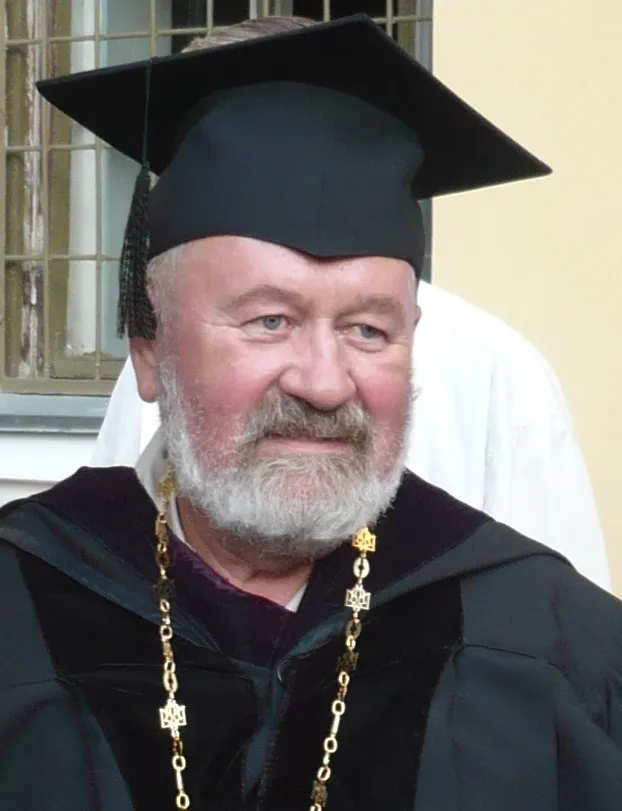
Ivan Dziuba
Sixtiers critic and dissident
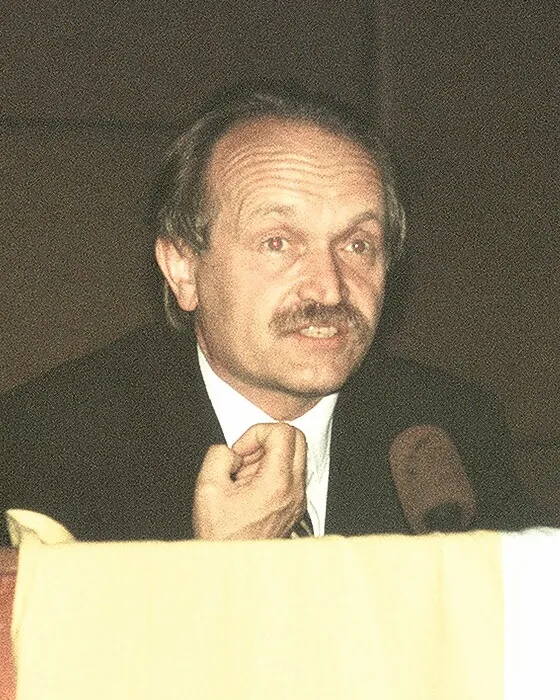
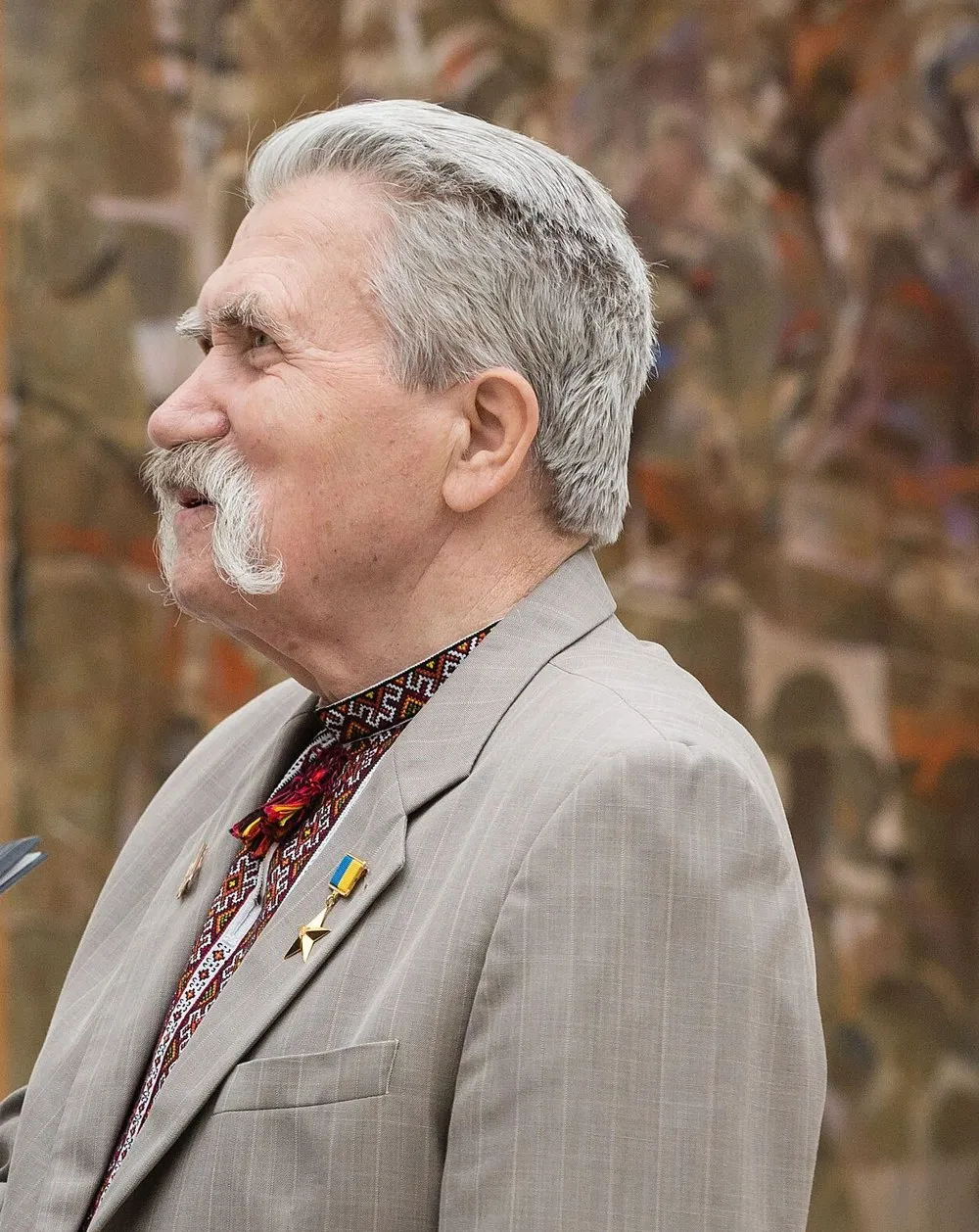
In a hall of 800 seats he spoke up about secret arrests, one of the first public protests against repression in the USSR. Ivan Dziuba, a Sixtiers critic and author of Internationalism or Russification?, later became minister of culture and a Hero of Ukraine.
Key accomplishments
- Internationalism or Russification? (1965), the samvydav (underground self-published) manifesto of the Ukrainian Sixtiers
- Public protest against the arrests of Ukrainian intellectuals at the premiere of Shadows of Forgotten Ancestors (Kyiv, 4 September 1965)
- Speech at Babyn Yar on the 25th anniversary of the massacre (29 September 1966)
- Minister of Culture of Ukraine (1992–1994), member of the National Academy of Sciences (1992), co-chair of the editorial board of the Encyclopedia of Modern Ukraine
- The monograph Taras Shevchenko: Life and Work (2005); Shevchenko National Prize (1991), Hero of Ukraine (2001)
800 seats, and a few dozen who stood up
On 4 September 1965 the Ukraina cinema in Kyiv was showing the premiere of Sergei Parajanov’s film Shadows of Forgotten Ancestors. All 800 seats were full. Ivan Dziuba stepped up in front of the audience and told them about the secret arrests of young Ukrainian intellectuals. The loudspeakers were switched on to drown him out, while Viacheslav Chornovil and Vasyl Stus called on the audience to stand in protest. According to one eyewitness, 50–60 people stood up. But an open protest had taken place: one of the first public protests against political repression in the USSR.
A critic who would not keep quiet
Dziuba was born in 1931 in the village of Mykolaivka in the Donetsk region and graduated from the Donetsk Pedagogical Institute, then did postgraduate studies at the Institute of Literature in Kyiv. He became one of the spokesmen of the Sixtiers (shistdesiatnyky), the generation that included Lina Kostenko and Vasyl Symonenko. His speeches at evenings in memory of Shevchenko, Lesya Ukrainka and Symonenko drew wide attention, and the journal Vitchyzna dismissed him for “ideological errors”. On 29 September 1966, at Babyn Yar, he spoke out against official and popular antisemitism.
A letter to the Party that the world read
At the end of 1965 Dziuba sent the leaders of Soviet Ukraine his essay Internationalism or Russification?. He showed how the authorities were Russifying Ukraine under the banner of “internationalism”, and called for a return to Lenin’s nationality policy, which in his view had been distorted by great-power chauvinism. The essay spread through samvydav (underground self-publishing), came out in the West in several languages and became the manifesto of the Ukrainian Sixtiers. In 1972 Dziuba was expelled from the Writers’ Union and arrested, and in 1973 he was sentenced to 5 years’ imprisonment. Later that year, after a public recantation, he was pardoned; he was rehabilitated in 1991.
A second life
In the late 1980s Dziuba returned to public life: he was one of the founders of the People’s Movement of Ukraine (Rukh), minister of culture in 1992–1994 and, from 1992, a member of the National Academy of Sciences. He chaired the Shevchenko National Prize Committee and co-chaired the editorial board of the Encyclopedia of Modern Ukraine, for which he wrote, among others, the entry on Mykola Zerov. He wrote a book on Mykola Khvylovy and the monograph Taras Shevchenko: Life and Work on Taras Shevchenko. He died in Kyiv on 22 February 2022, two days before Russia’s full-scale invasion.
Debates and assessments
The most controversial episode of Dziuba’s life is his recantation of 1973. After his conviction he wrote a public renunciation of his views and was released in November 1973. Some dissidents, notably Valentyn Moroz and Leonid Pliushch, condemned him sharply for it. Later came his book Facets of a Crystal on the literatures of the peoples of the USSR. The Encyclopedia of Ukraine regards it as a repudiation of Internationalism or Russification?; the Encyclopedia of Modern Ukraine, by contrast, says that in these studies he worked “ostensibly to defend the ideas of internationalism” while trying to show each nation’s undistorted face. In independent Ukraine Dziuba again became one of the most respected intellectuals.
Why it matters today
Internationalism or Russification? remains one of the most important texts on the Russification of Ukraine. And Dziuba’s story shows that one person armed with words can challenge a system.