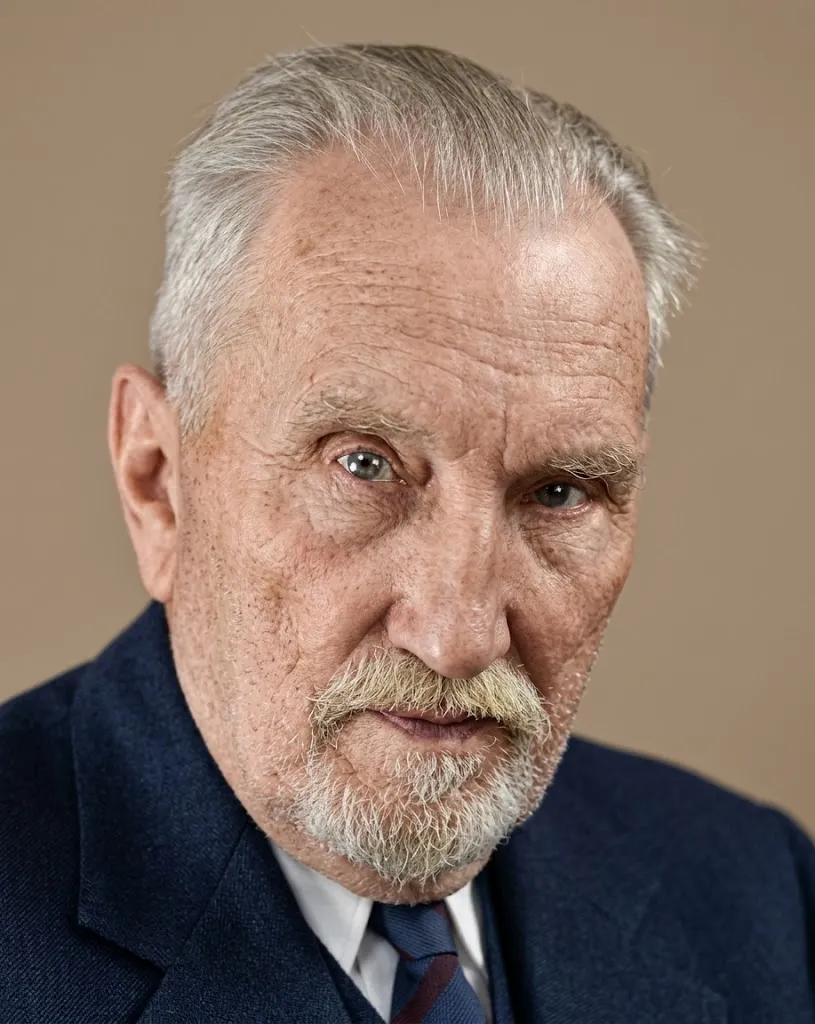
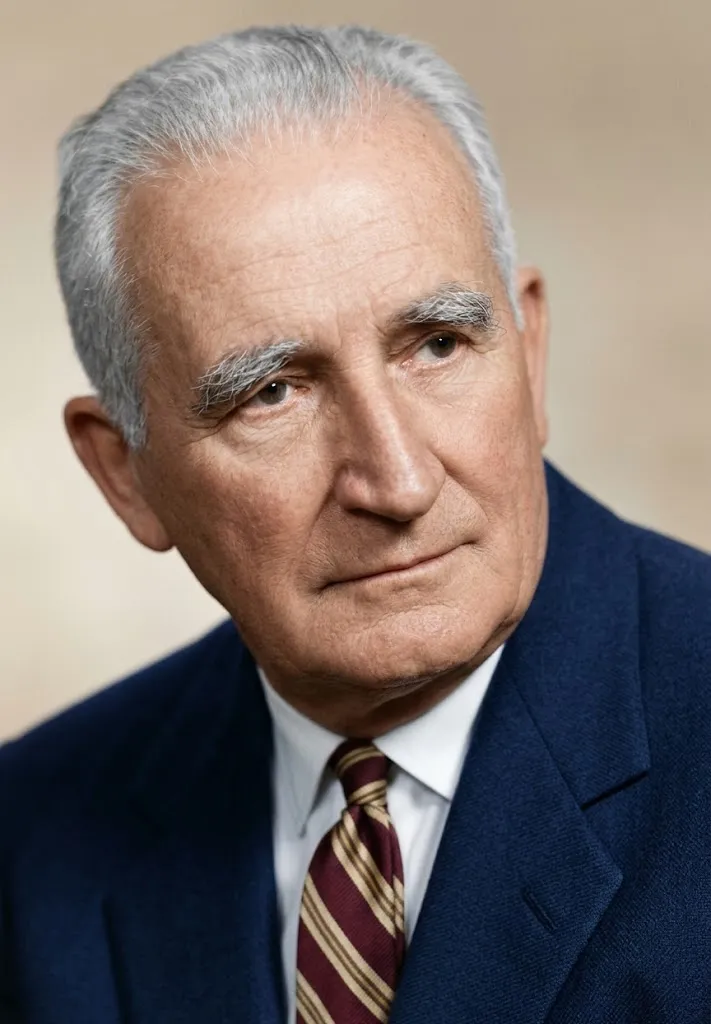
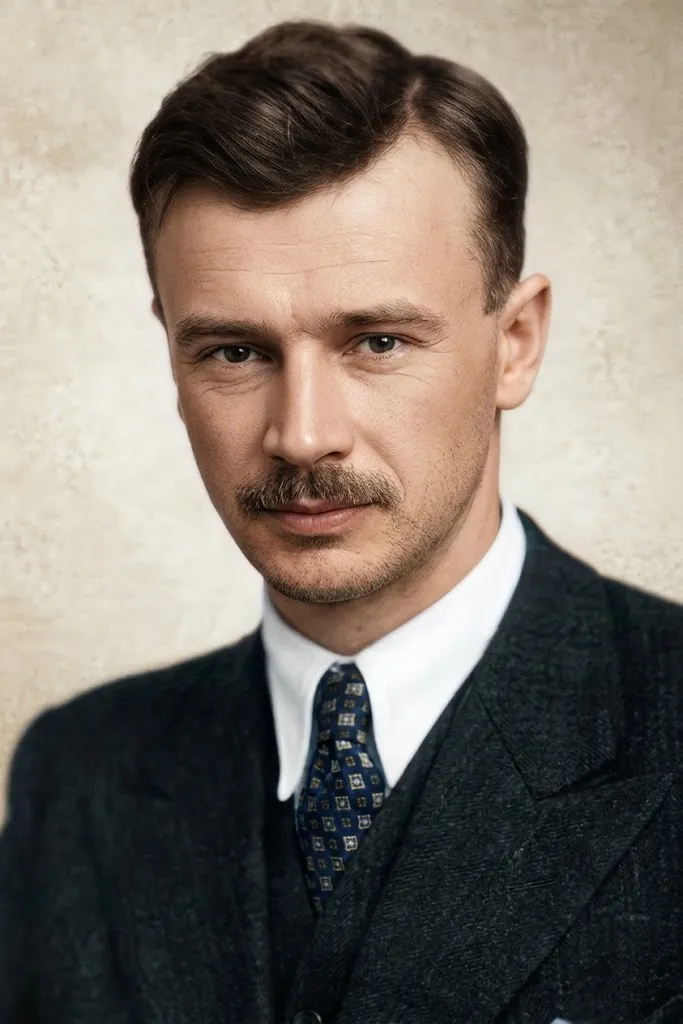
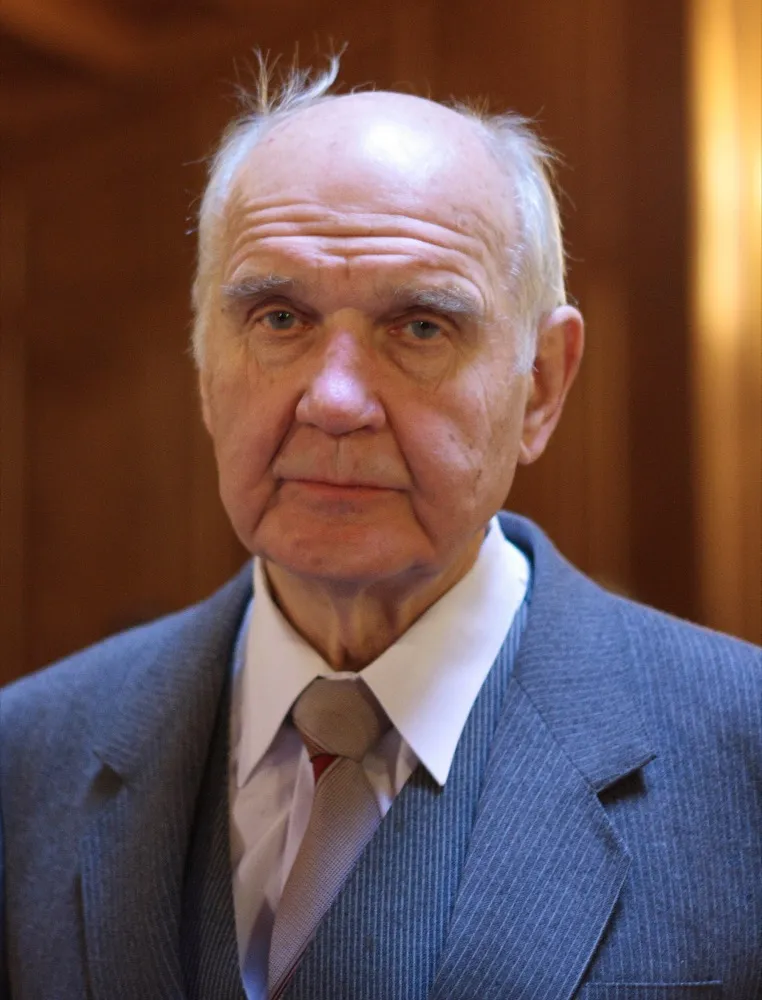
Mykola Plaviuk
Last president of the UNR in exile
He handed independent Ukraine the flag, seal and insignia of a state that had lived in exile for more than 70 years. Mykola Plaviuk, born in the Carpathian foothills and settled in Canada, was the last president of the UNR in exile and in 1992 declared Ukraine its successor.
Key accomplishments
- Head of the Ukrainian National Federation of Canada (until 1966)
- One of the organizers of the World Congress of Free Ukrainians, its secretary general and president (from 1978)
- Head of the Leadership of Ukrainian Nationalists, the Melnyk branch of the OUN (from 1979 or 1981; sources differ)
- Last president of the UNR in exile (1989–1992)
- In August 1992 laid down the powers of the UNR State Centre and declared Ukraine the UNR’s successor
- Co-founder of the Oleh Olzhych Foundation and the Olena Teliha Publishing House in Kyiv
A state returned without a shot
On 24 August 1992, in Kyiv’s Mariinskyi Palace, a man who had come from Canada handed Ukraine’s president, Leonid Kravchuk, a silk flag with the trident, a seal and the presidential insignia: a chain of tridents with a small case bearing the coat of arms of Hetman Ivan Mazepa. With that, Mykola Plaviuk, the last president of the Ukrainian People’s Republic (UNR) in exile, brought home the symbols of a state that had lived abroad since 1920.
From Rusiv to Canada
Plaviuk was born in 1925 (some sources say 1927) in Rusiv, in the Carpathian foothills, the home village of Vasyl Stefanyk. While still at school in Sniatyn he joined the youth wing of the Organization of Ukrainian Nationalists (OUN), and during the Second World War he worked in its underground. The end of the war found him in Germany. In 1949 he graduated in economics from the University of Munich and that same year moved to Canada.
There he spent decades working in the meat-processing industry and gave his free time to the community. Plaviuk led the Ukrainian National Federation of Canada, helped create the World Congress of Free Ukrainians, which brought together the diaspora in many countries, and in 1978 became its president.
A president without a territory
After the death of OUN leader Andrii Melnyk in 1964, Plaviuk joined the Leadership of Ukrainian Nationalists, the governing body of that branch of the OUN, and became its head in 1979 or 1981 (sources differ). In the late 1980s he became vice-president of the UNR in exile, and in December 1989, after the death of president Mykola Livytskyi, he took charge of the UNR State Centre. Among those who had kept that centre going for decades was Andrii Livytskyi, Mykola’s father.
Mission accomplished
Ukraine’s independence in 1991 meant the state in exile could finally come home. In March 1992, on Plaviuk’s proposal, the Ukrainian National Council decided to end the work of the UNR’s institutions abroad. On 22 August, at a ceremonial session of the Verkhovna Rada marking the first anniversary of independence, he laid down the powers of the UNR State Centre and declared independent Ukraine the successor of the UNR. Two days later came the handover at the Mariinskyi Palace where this story began.
In 1992 Plaviuk moved the OUN’s leadership to Ukraine, and in 1993 he became a Ukrainian citizen. He co-founded the Oleh Olzhych Foundation and the Olena Teliha Publishing House. Mykola Plaviuk died on 10 March 2012 in Ontario and is buried in Oakville.
Why it matters today
Mykola Plaviuk closed the long story of a state in exile, and that ending became a bridge. His declaration tied the independent Ukraine of 1991 to the UNR: the new state became the continuation of the one generations of Ukrainians had fought and worked for. He showed that loyalty to a state can be kept for decades across an ocean, and that the best end to such service is to hand power to one’s own free people. Everyone defending Ukraine today stands in the same line of continuity he brought back to Kyiv.