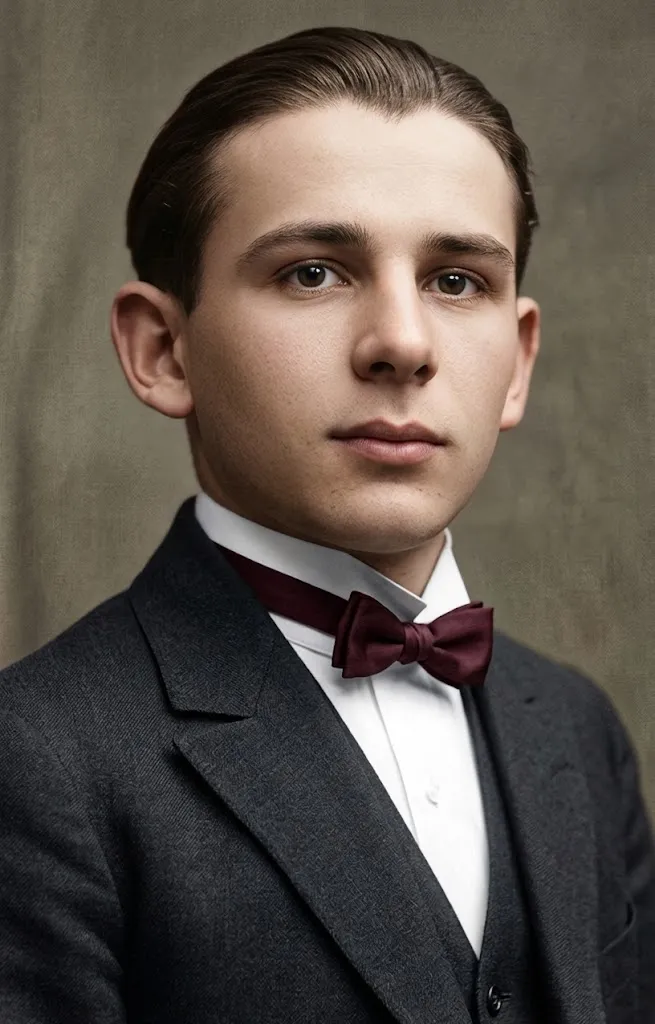
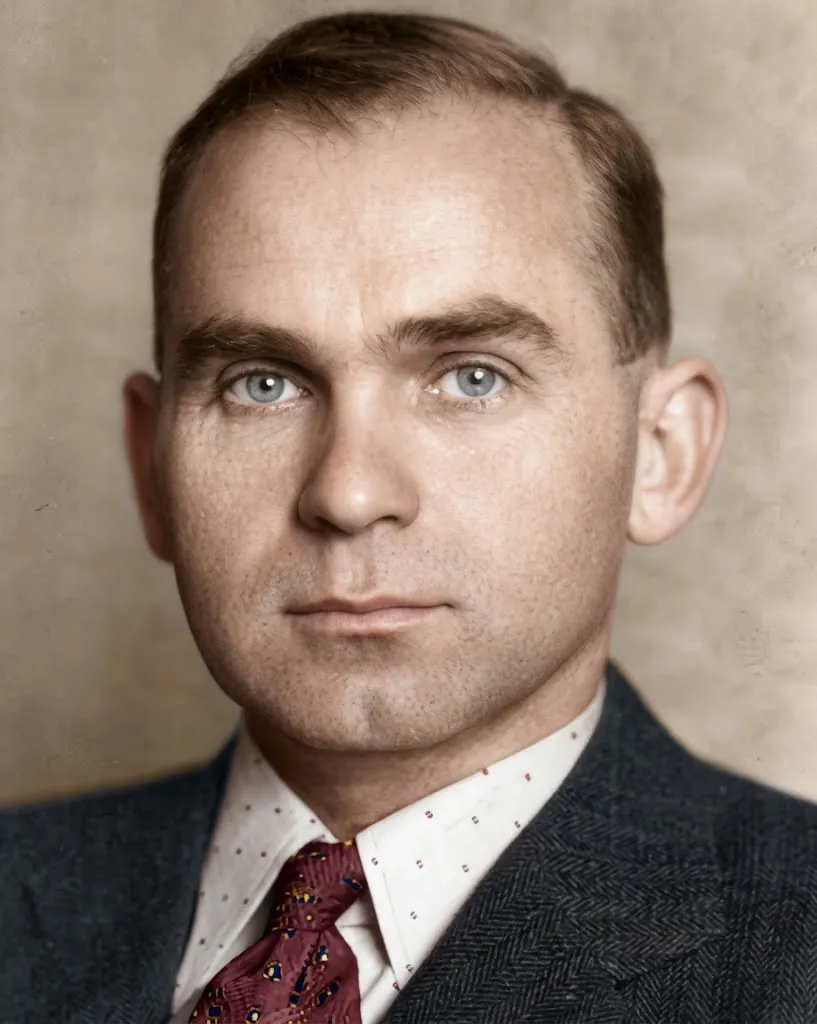
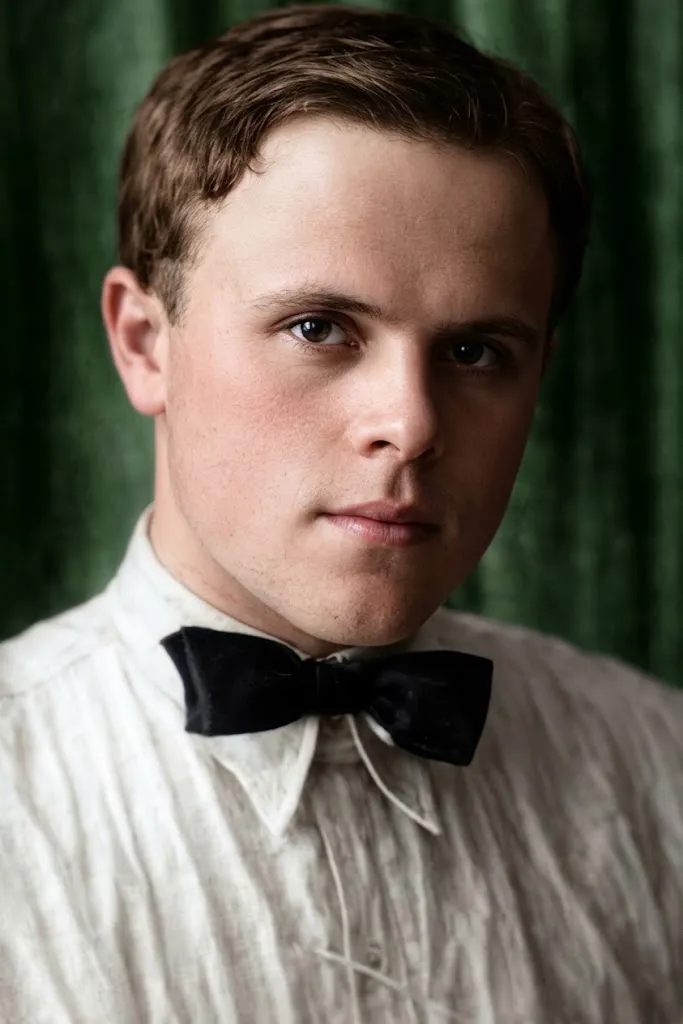
Oleh Olzhych
Poet, archaeologist, OUN-M leader
Kandyba in science, Olzhych in poetry, Kardash in the underground. The son of the poet Oleksandr Oles was an expert on Trypillian pottery, a poet of the Prague school and one of the leaders of the OUN-M. In 1944 he died in the Nazi concentration camp of Sachsenhausen. A contested figure.
Key accomplishments
- Poetry collections Rin (1935) and Vezhi (1940); the posthumous Pidzamche (1946)
- Doctoral thesis on Neolithic painted pottery in Galicia (1930) and a monograph on the Trypillian settlement of Shypyntsi in Bukovyna (1937)
- Head of the OUN's Cultural Section (from 1937)
- Deputy head of the Leadership of Ukrainian Nationalists (from 1942); acting head from January 1944
Three surnames, one man
Why would anyone need three surnames? Oleh Kandyba had a separate name for each of his callings: in science he signed himself Kandyba, in poetry Olzhych, and in the underground Kardash. He was born in 1907 in Zhytomyr, the son of the poet Oleksandr Oles. His father fondly called him Leleka, “the stork”, so Oleh signed his first published story “O. Leleka”. In 1923 he and his mother left the country to join his father, and the family eventually settled in Prague.
The scholar Americans learned from
At Charles University Oleh studied archaeology, and in 1930 he earned his doctorate with a thesis on Neolithic painted pottery in Galicia. In 1932 the 25-year-old Dr Kandyba was invited to an American dig at Starčevo near Belgrade, run together with Harvard University’s museums. There he lectured American students as an authority on the painted pottery of Central and Eastern Europe. In 1937 his monograph on the large Trypillian settlement of Shypyntsi in Bukovyna came out. He is considered the first Ukrainian professional archaeologist to study the Trypillian culture in western Ukraine. The writer and archaeologist Dokiia Humenna recalled drawing Trypillian patterns from this book years later in New York.
A poet of the Prague school
Olzhych’s verse is stern, spare and unsentimental, a call to duty and action. He is seen as following the tradition of the Neoclassicists, and he often turned to ancient history to argue for Ukrainians’ right to a state of their own. Together with Yevhen Malaniuk he is counted among the Prague school of émigré poets.
In 1929 Olzhych joined the Organization of Ukrainian Nationalists (OUN). In 1937, at Yevhen Konovalets’s request, he took charge of its Cultural Section and brought in poets of the Prague school, among them Olena Teliha.
From Khust to Kyiv
Olzhych came to Carpatho-Ukraine in autumn 1938 as a representative of the OUN leadership and took part in building this short-lived state and in the fight against the Hungarian army in 1939. When the OUN split in 1940, he sided with Andrii Melnyk. In autumn 1941, after Germany attacked the USSR, Olzhych arrived in Kyiv. There he first helped set up the local administration and a Ukrainian police force, and later the Ukrainian National Council. Soon, though, the Nazis began arresting Melnyk’s followers, and Olzhych took charge of the OUN-M underground in Ukraine.
The last arrest
Olzhych became Melnyk’s deputy in 1942, and in January 1944, after Melnyk’s arrest, he took over as acting head of the leadership. On 25 May 1944 the Gestapo arrested him in Lviv. He was taken to the Sachsenhausen concentration camp near Berlin, where he died under interrogation on 9 or 10 June 1944, aged 36.
Debates and assessments
Supporters of his commemoration stress that he led an underground against the Nazis and died in one of their camps; his arrest is linked to his anti-Nazi activity and contacts with the Allied countries, though other sources say the reason is unknown. Yet in 1941 the OUN-M, whose leadership he belonged to, cooperated with the German authorities, and Olzhych himself helped set up the Ukrainian police in Kyiv. Scholars write that in the first months of the occupation Melnyk’s followers dominated this police, and that Kyiv’s auxiliary police was directly or indirectly involved in the Holocaust. At the same time, no reliable evidence of its direct part in the mass shootings at Babyn Yar has been found, and the OUN-M’s cooperation with the Germans was short-lived: by December 1941 the Nazis had arrested many of its activists. The assessment of Olzhych’s role in those months remains a subject of research.
Why it matters today
Olzhych showed that an émigré without a state could be a scholar American archaeologists listened to and a poet who is still read. In his verse he spoke of Ukrainians’ right to a state of their own, and in Khust in 1938 and in Kyiv in 1941 he tried to build one. His life, together with the debates around it, shows how high a price the fight for independence cost between two totalitarian regimes.