1863–1910
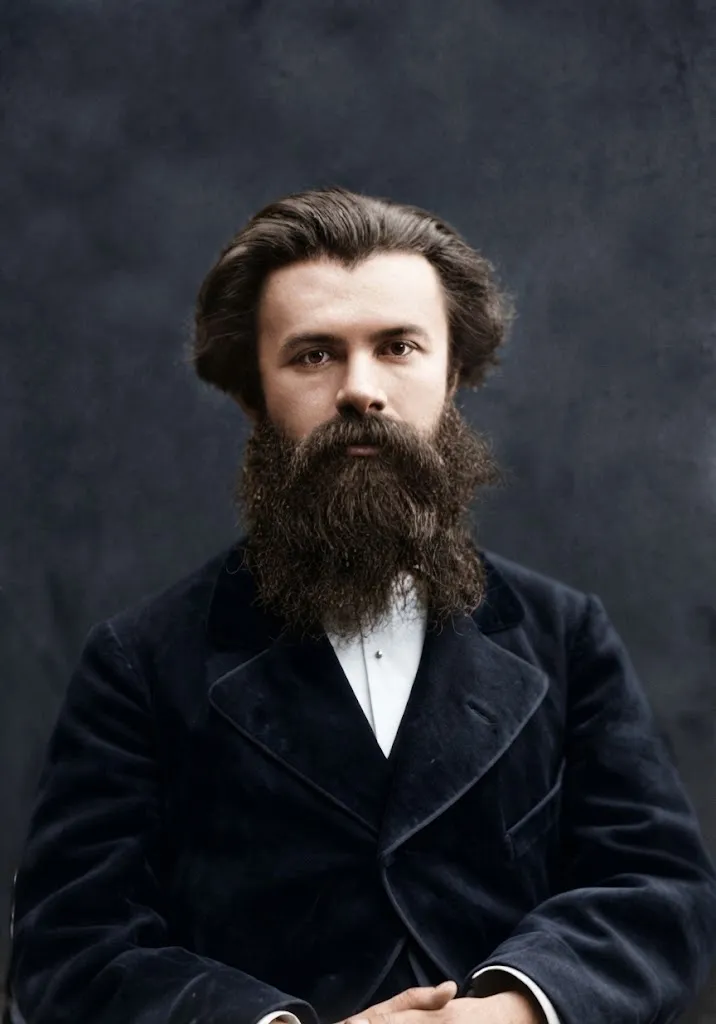
Borys Hrinchenko
Compiler of the Ukrainian dictionary
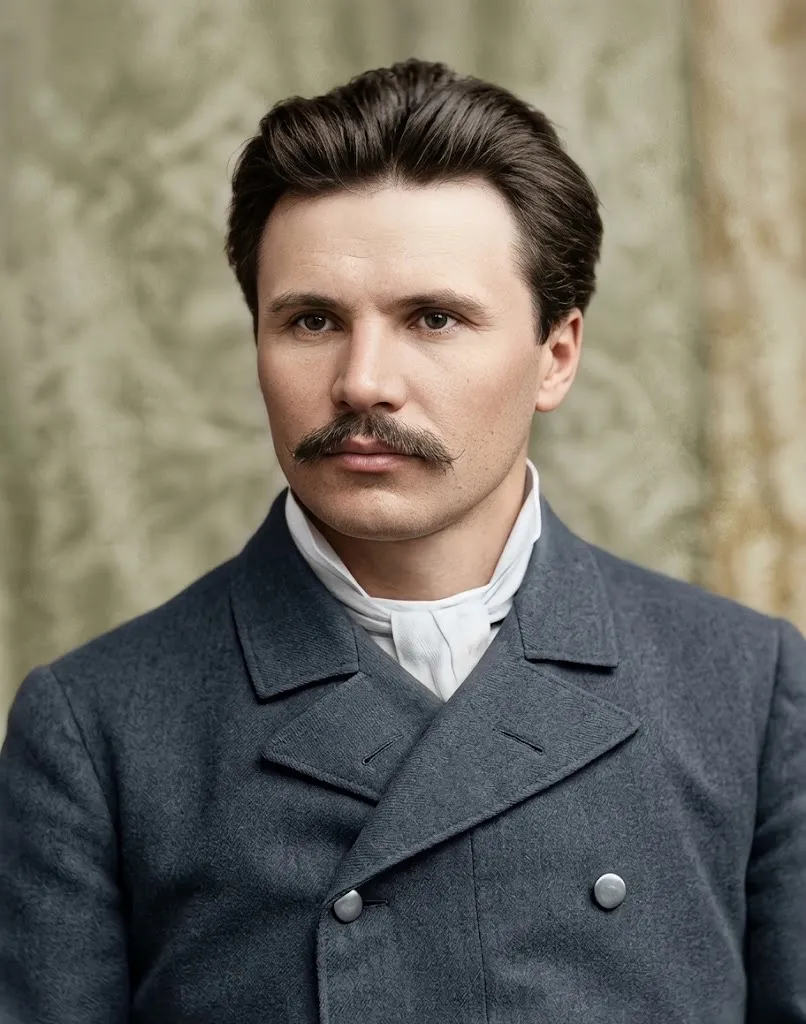
People spent 46 years collecting words for this dictionary; one man finished it in two. Borys Hrinchenko, a teacher and linguist from a russian-speaking home, taught village children in their own language, published books for peasants and gave Ukrainians a dictionary of 68,000 words.
Key accomplishments
- Compiled the four-volume Dictionary of the Ukrainian Language (1907–1909), some 68,000 words; the Saint Petersburg Academy of Sciences’ second Kostomarov Prize
- Taught in village schools for over ten years; wrote some of the first Ukrainian-language textbooks
- Set up a publishing house in Chernihiv that put out 50 popular educational books for ordinary people
- Founder and first head of the Kyiv Prosvita society (1906–1909)
- Co-founder of the Ukrainian Democratic and Ukrainian Radical parties (1904); wrote the programme of the merged party (1905)
- Letters from Dnieper Ukraine (1892–1893); some 50 short stories, novelettes, plays and translations
- Three volumes of Ethnographic Materials (1895–1899) from the Chernihiv region and neighbouring provinces
A dictionary 46 years in the waiting
Imagine Ukrainians collecting words for a dictionary for 46 years, and still no dictionary. In 1902 the job went to a man who had once been shut out of university. Borys Hrinchenko finished it in two years.
The boy who chose his language
Hrinchenko was born in 1863 on the Vilkhovyi Yar farmstead near the village of Ruski Tyshky in the Kharkiv region, into an impoverished noble family. His father, a retired officer, spoke russian at home and Ukrainian only with the peasants. The boy’s first poems were in russian too. Then Taras Shevchenko’s Kobzar changed everything: Hrinchenko began writing in Ukrainian.
Arrested at sixteen
He studied at a technical secondary school in Kharkiv. At sixteen he was arrested for spreading a banned book by Serhii Podolynskyi and spent several months in prison. He was barred from higher education, so he taught himself and passed the exam to become a village schoolteacher.
A teacher who wrote his own textbooks
For more than ten years he taught in village schools in the Kharkiv and Katerynoslav provinces, in the children’s own language. He wrote some of the first Ukrainian textbooks for them, such as the reader Native Word. For a while he worked at Khrystyna Alchevska’s school in Oleksiivka, but he disagreed with her teaching the children in russian after the Ems Ukaz, and left.
In the early 1890s Hrinchenko co-founded the Brotherhood of Taras, whose members swore at Shevchenko’s grave to spread his ideas. In his open Letters from Dnieper Ukraine he argued with Mykhailo Drahomanov about where Ukrainian literature should go.
Fifty books past the censors
In 1894 Hrinchenko moved to Chernihiv and worked for the provincial zemstvo. With money from the patron Ivan Cherevatenko he set up the largest publishing house in russian-ruled Ukraine. Despite the censors it put out 50 popular educational books for villagers.
Two years on the dictionary
In 1902 he moved to Kyiv. The Kyiv Hromada asked him to put in order the material that the journal Kievskaia starina had been collecting for years. Hrinchenko set terms: he would be paid, and the dictionary would come out under his name. The Hromada agreed and paid him 100 rubles a month. He worked on it with his wife, Mariia Zahirna. The dictionary, begun long before him, also drew on the work of the composer Mykola Lysenko and the writers Ivan Nechui-Levytskyi and Panteleimon Kulish. The patron Yevhen Chykalenko checked and added the words for farming and plants.
The four-volume Dictionary of the Ukrainian Language, some 68,000 words, came out in 1907–1909. The Saint Petersburg Academy of Sciences gave Hrinchenko its second Mykola Kostomarov Prize for it. For a long time it remained the fullest dictionary of Ukrainian, and it is still considered one of the finest in world lexicography.
From party politics to Prosvita
In 1904 he and Serhii Yefremov founded the Ukrainian Democratic Party, and soon a Radical one as well. In 1905 the two parties merged, and Hrinchenko wrote the programme of the new one. In 1906 he founded the Kyiv Prosvita society and became its first head.
In 1908 his daughter Nastia died of tuberculosis. Hrinchenko, ill himself, went to Italy for treatment and died in Ospedaletti in 1910. His funeral in Kyiv turned into a mass Ukrainian protest against the authorities.
Why it matters today
Hrinchenko chose Ukrainian for himself and did everything he could so that others would have it too: he taught children in it, wrote their textbooks and published books for villagers. He finished his dictionary while the empire still banned Ukrainian books, and for a long time it remained the fullest one there was. He showed that a language is defended by everyday work: in the classroom, at the printing press, in Prosvita. Anyone looking for the right Ukrainian word is using what he saved.