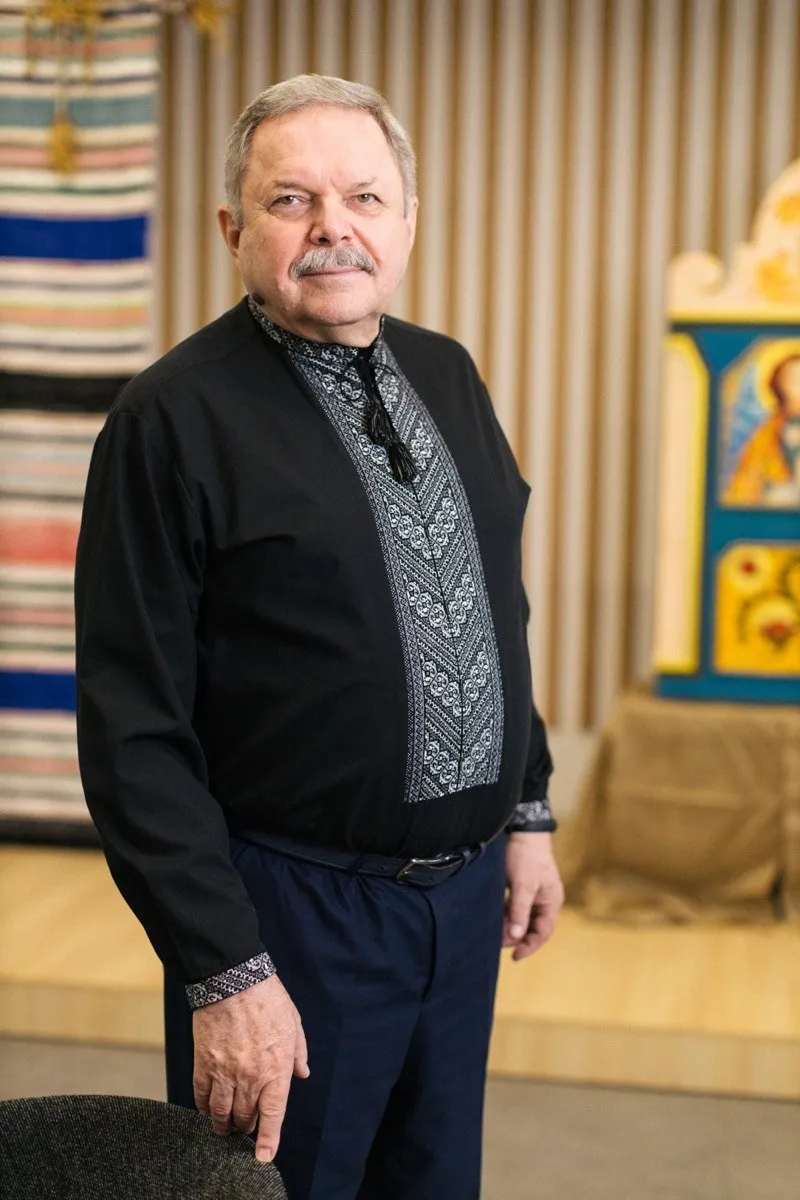
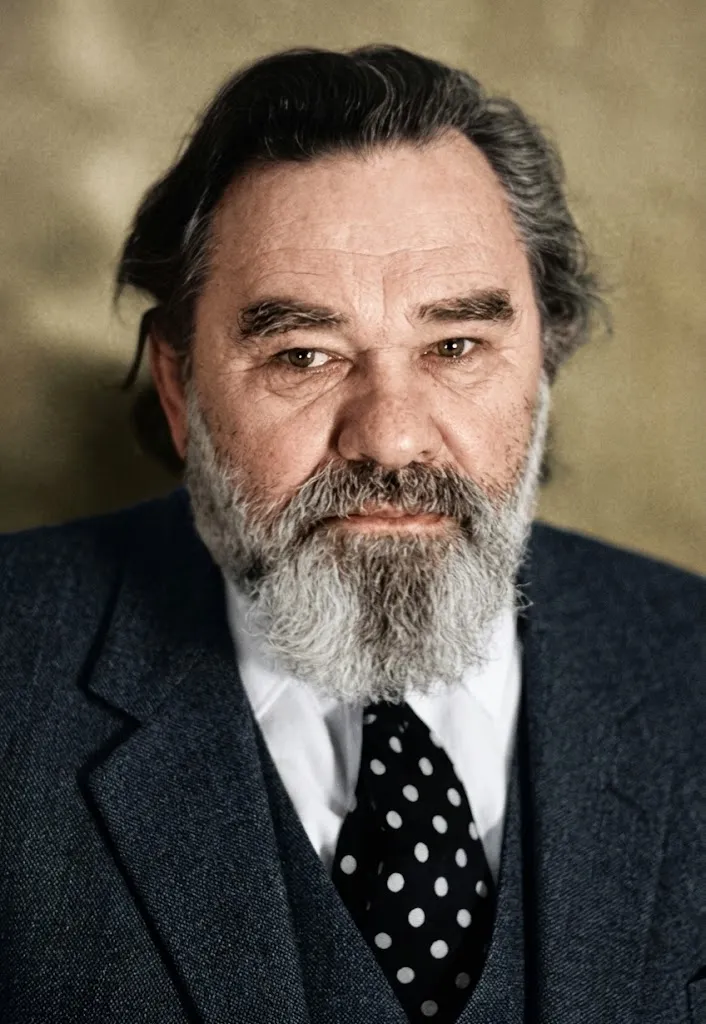
Mykola Matusevych
Human rights defender and journalist
In almost a year of interrogation he answered just five questions: his first name, patronymic, surname, year and place of birth. Mykola Matusevych, a co-founder of the Ukrainian Helsinki Group, went through camps, prison and exile and never backed down.
Key accomplishments
- A founding member of the Ukrainian Helsinki Group (1976), co-author and signatory of its memoranda and statements
- Sang Shevchenko’s “Testament” with Myroslav Marynovych at a Shevchenko memorial evening in the Kyiv Philharmonic (1977)
- Boycotted his investigation and trial, and in captivity joined the political prisoners’ protests and hunger strikes
- Co-host of a human rights programme on Radio Liberty
- Order for Courage, 1st class (2006)
Five questions in a year
KGB investigators had a whole year to get Mykola Matusevych talking. He answered just five questions: his first name, patronymic, surname, year and place of birth. They heard nothing more from him. Matusevych was born on 19 July 1947 (some sources say 1946) in the village of Matiushi near Bila Tserkva. He studied history at Kyiv University, but in 1973 he was expelled in his fourth year, supposedly for poor grades. The real reason was his sympathy for the persecuted Ukrainian intelligentsia.
A caroller under watch
Matusevych worked as an editor at a medical publishing house, but the KGB advised employers not to hire him, and he was fired again and again. He passed around samvydav and, with his friend Myroslav Marynovych, went carolling through Kyiv with a Christmas star. For carolling at Christmas 1975 he was jailed for 15 days.
A “Testament” that wasn’t on the programme
Matusevych was one of the ten founders of the Ukrainian Helsinki Group, set up in November 1976 and led by Mykola Rudenko. He helped write and spread its memoranda and statements. When Rudenko and Oleksa Tykhyi were arrested in February 1977, Matusevych signed a letter to the governments that had signed the Helsinki Accords, asking them to help free the two. In March 1977, at a Shevchenko memorial evening in the Kyiv Philharmonic, he and Marynovych walked on stage without permission and sang Shevchenko’s “Testament”, which was not on the programme. The lights in the hall went out, but the audience stood up and kept singing.
The longest sentence
Matusevych and Marynovych were arrested together, on 23 April 1977. They were charged with “anti-Soviet agitation and propaganda”, and Matusevych with “hooliganism” too, over an incident in the Carpathians four years earlier. He boycotted his trial in Vasylkiv near Kyiv in the spring of 1978. He got the longest sentence the charge allowed: seven years in strict-regime camps and five years of exile. In protest against the verdict he went on hunger strike for a month.
The cell that couldn’t break him
In a camp in the Perm region, Matusevych signed the political prisoners’ letters and appeals and joined their protest hunger strikes and strikes. He was thrown into the punishment cell nine times, ten months in all, despite a weak heart. In 1980 he was sentenced to three more years, in the prison in Chistopol. His family was pressured too: his wife Olha Heiko and his sister were told to disown him, and they refused. The KGB promised his mother a visit with her son if she talked him into repenting.
A pardon he wouldn’t accept
Matusevych served his exile in the village of Kira in the Chita region. In 1988 he was “pardoned”, but he refused to leave until he was rehabilitated. In 1989 he settled in Vasylkiv, worked as a builder, wrote for the newspaper Dzerkalo Tyzhnia and, with Serhii Naboka, hosted a human rights programme on Radio Liberty. He stayed out of politics: he was against former political prisoners taking government posts. In 2006 he was awarded the Order for Courage, 1st class. Of himself he said: “I didn’t do anything heroic. I just did what my soul was drawn to: I defended human dignity.”
Why it matters today
Mykola Matusevych showed that even facing an investigator, a court and a punishment cell, a person can stay free: silent when betrayal is expected of him, singing when singing is forbidden. A song taken up by a hall in the dark proved that the Ukrainian word was stronger than fear. The system gave him the longest sentence it could, yet never made him repent. He stands in the long line of Ukrainians who defended human dignity without weapons, a line carried on by those who defend it today.