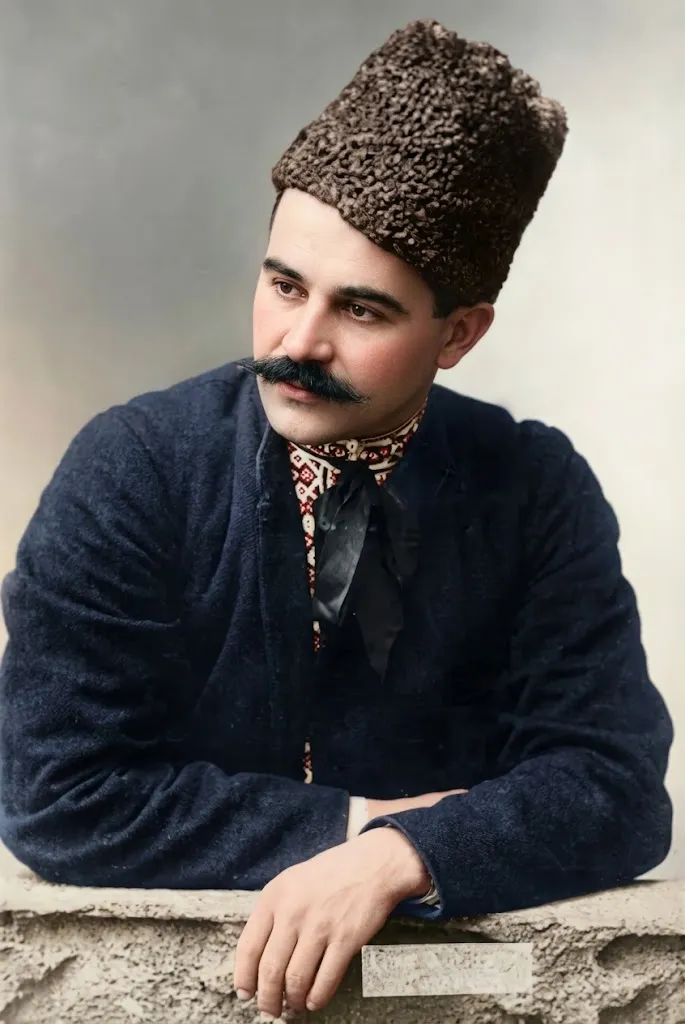
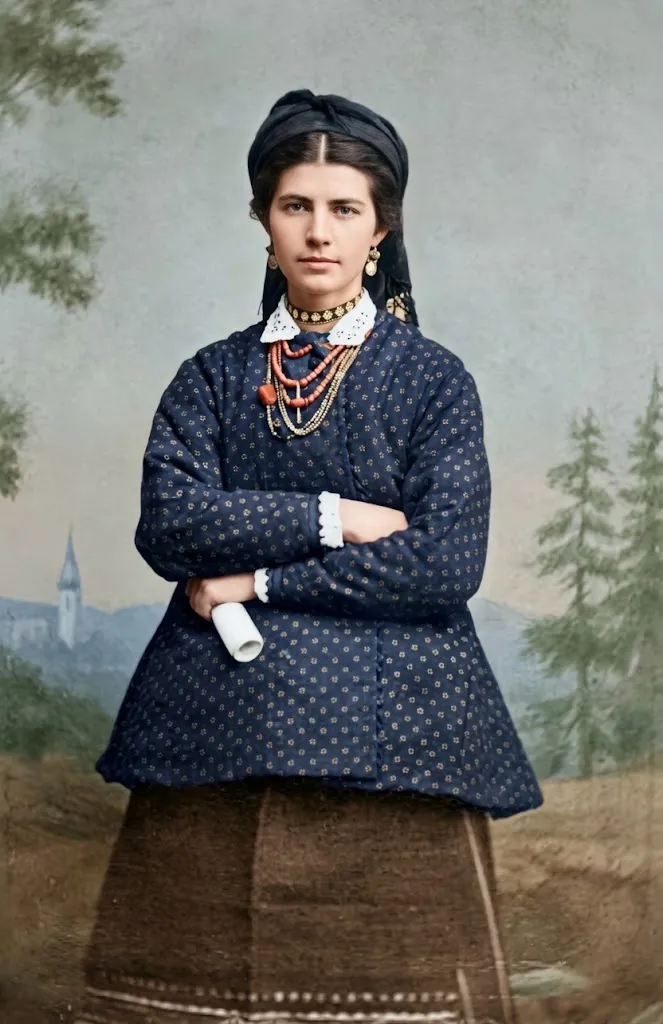
Olha Kobylianska
Writer, author of The Land
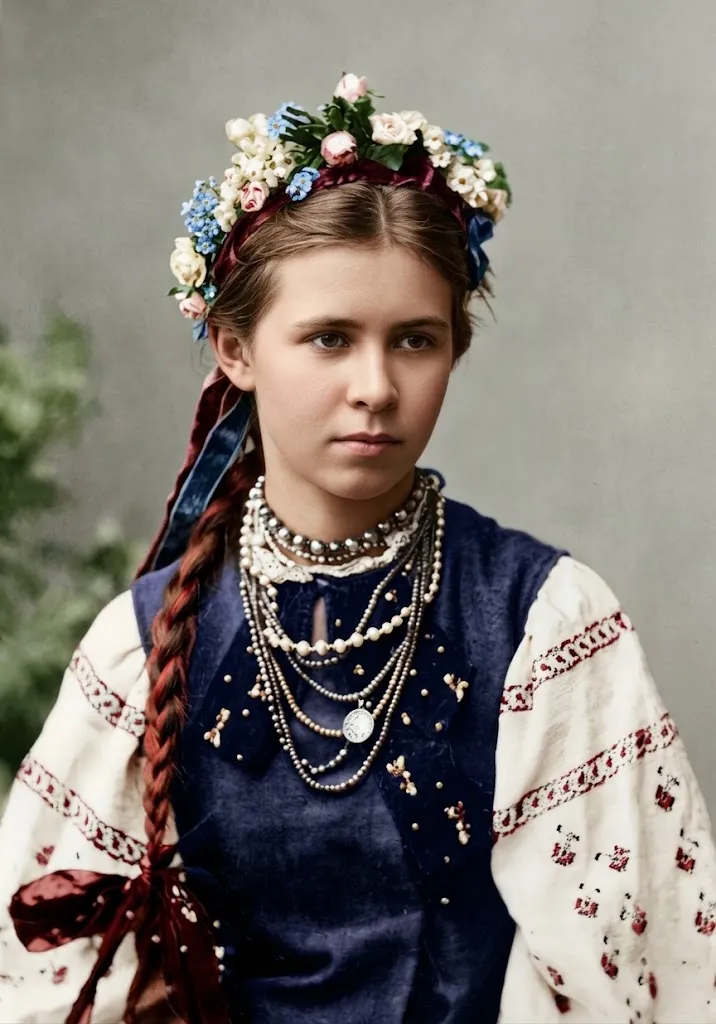
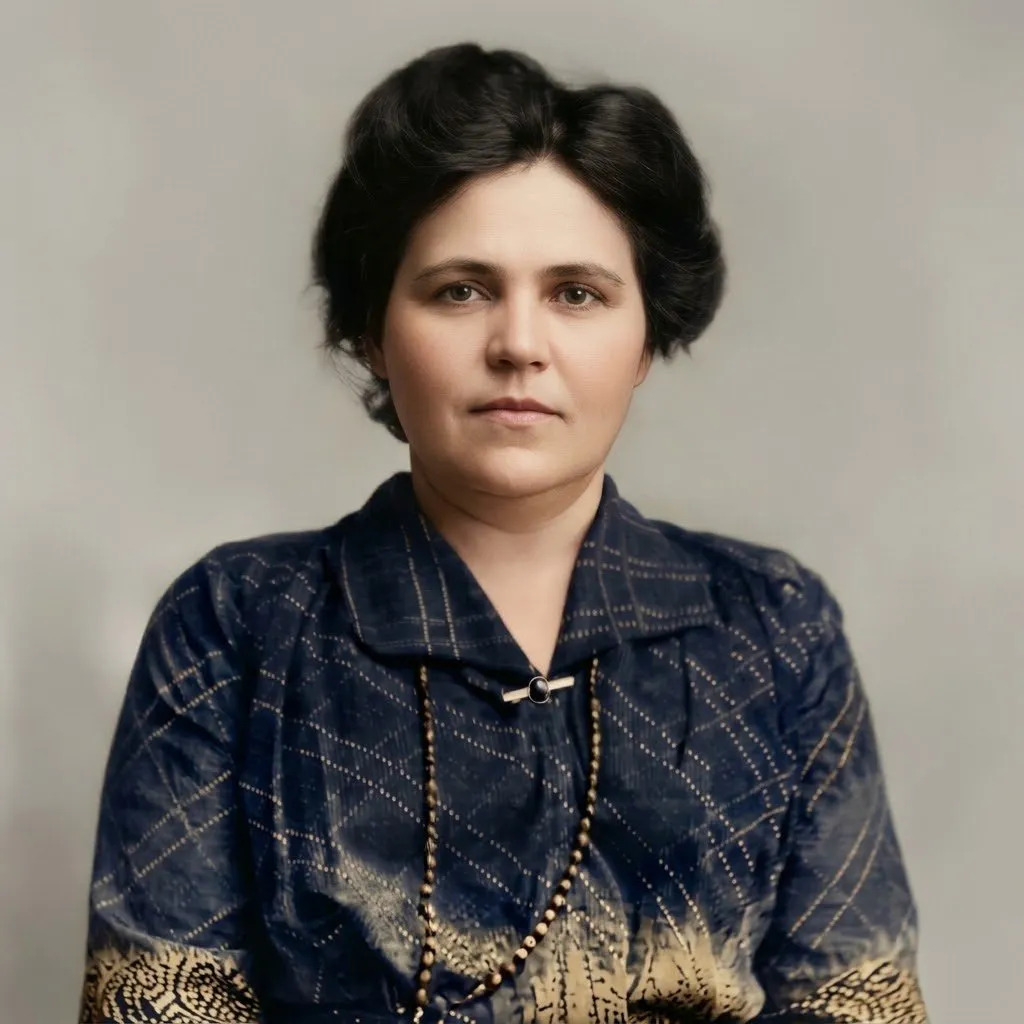
She wrote her first stories in German but chose Ukrainian and became a classic of Ukrainian prose. Olha Kobylianska of Bukovyna, author of The Land and The Princess, was among the first in Ukrainian literature to speak up for a woman’s right to her own life, and Lesya Ukrainka’s friend for 14 years.
Key accomplishments
- The novella The Land (1902), about a brother killing his brother over land in a Bukovynian village
- The novellas A Person and The Princess, about educated women who want an independent life
- The novella On Sunday Morning She Gathered Herbs
- A co-founder of the Society of Ruthenian Women in Bukovyna (1894)
A classic who started out in German
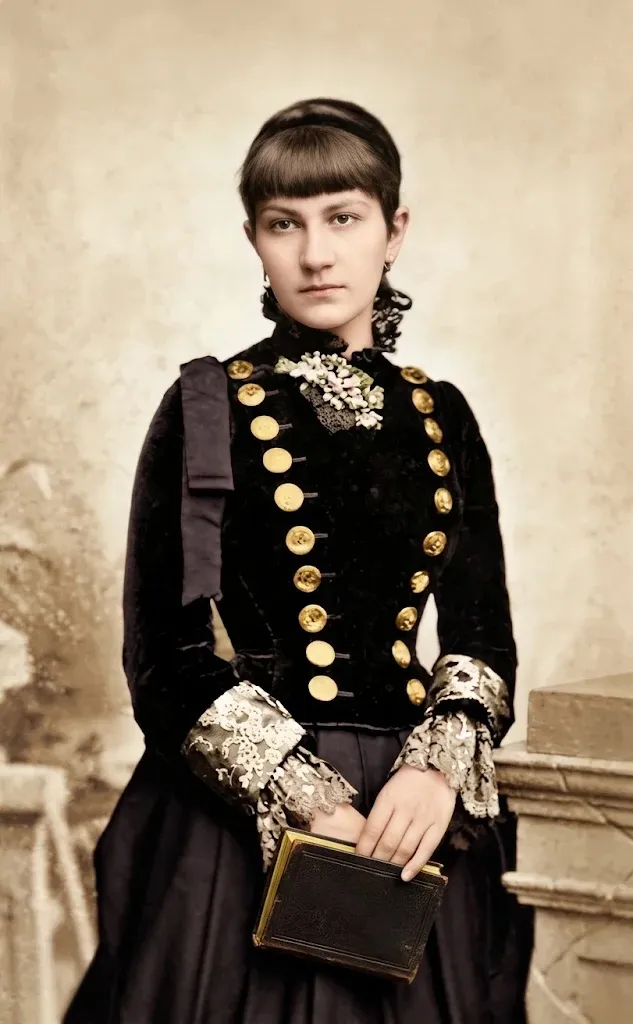
Did you know that one of Ukraine’s best-known writers kept her first diary and wrote her first stories in German? Olha Kobylianska was born on 27 November 1863 in the small town of Gura Humora in Bukovyna (now Gura Humorului in Romania), which then belonged to Austria-Hungary. She herself wrote in a letter that she was born on 24 November but celebrated on the 27th, because as a young girl she had read that the 24th was a “day of misfortune”. She was the fourth of seven children. Her father, a minor civil servant, came from Galicia; her mother, of German descent, learned Ukrainian and raised the children as Ukrainians. The family moved often, and at school Olha learned only German and Romanian. Her parents thought four grades of primary school were enough for a daughter, and gave an education to her five brothers instead. But Olha went on teaching herself, reading her brothers’ books and listening to their conversations. She played the zither well, drew, rode horses, acted in an amateur theatre in Câmpulung and dreamed of becoming an actress, but her parents would not allow it. The diary she began in 1883 was in German too.
She chose Ukrainian
What changed things was the people she met. Her friend Sofiia Okunevska urged her to write not in German but in Ukrainian, for her own people, and gave her Ukrainian books. Meeting Nataliia Kobrynska, who was starting the women’s movement in Galicia, and other Ukrainian writers changed her outlook: Kobylianska joined the women’s movement and began writing in Ukrainian. She reworked her German novellas, and so came A Person, her first novella in Ukrainian, and The Princess, which grew out of the German “Lorelei”. Their heroines are educated women in provincial society who want an independent life. In 1891 the family moved to Chernivtsi. In 1894 Kobylianska became one of the founders of the Society of Ruthenian Women in Bukovyna and gave a talk on the idea of the women’s movement: a woman has the right to an independent spiritual and personal life. She is considered one of the first in Ukrainian literature to state a woman’s full rights so clearly. Her stories still came out in German too: in 1901 a collection, Kleinrussische Novellen, was published in Germany.
The talent Lesya Ukrainka saw
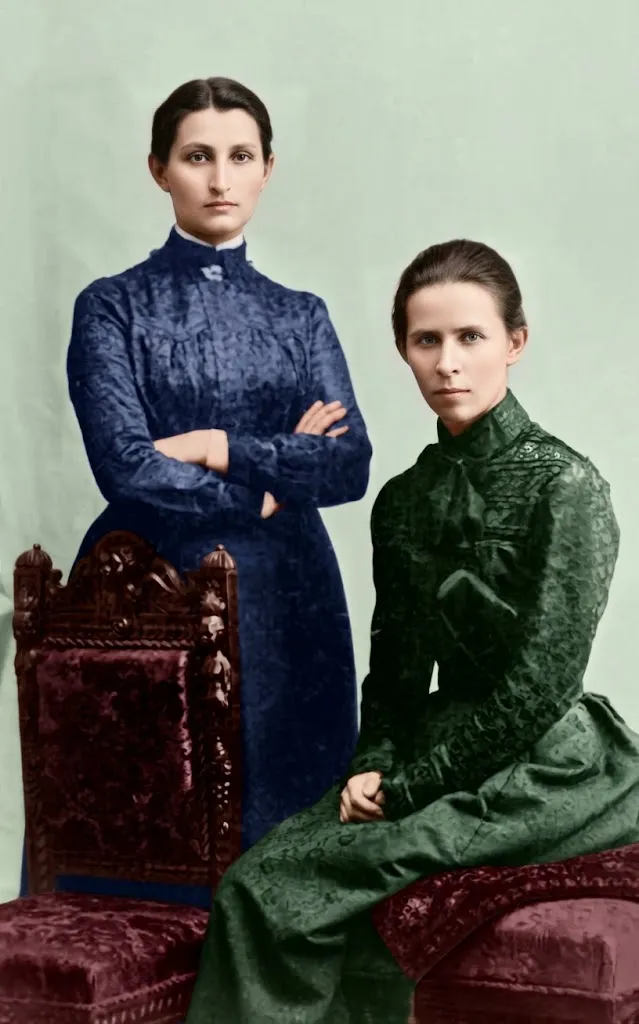
When Lesya Ukrainka read The Princess, she saw in it “true literary talent”. In 1899 the public figure Mykhailo Pavlyk introduced the two writers by letter, and that summer they met for the first time at the Kosach family estate near Hadiach in the Poltava region. On the same trip Kobylianska also visited Kyiv and Taras Shevchenko’s grave at Kaniv. In spring 1901, after the death of her close friend Serhii Merzhynskyi, Lesya Ukrainka came to Chernivtsi and stayed with Kobylianska’s family. That was when their well-known photo together was taken at Jan Krzanowski’s studio in Chernivtsi. Their letters went on until 1913.
The Land: a village with no idyll
The novella The Land (1902) grew out of a real tragedy. In autumn 1894, in the village of Dymka near Chernivtsi, where Kobylianska had lived in 1889–1891, a man killed his brother over land. The writer turned the story into fiction. She showed how greed for land destroys a family, and dispelled the image of the Ukrainian village as an idyll. The Land became one of her finest books: in 1947 the director Vasyl Vasylko staged it, in 1954 a film came out, and in 2025 a new production opened at the Lesya Ukrainka National Drama Theatre in Kyiv.
A pen she never put down
Illness did not stop her work. In 1903 Kobylianska had the first of three strokes and was left partly paralysed. Yet in 1905 the young Ukrainian modernists dedicated their almanac For Beauty (Za krasoiu) to her, and it became their manifesto. And she kept writing, including memoirs of Ivan Franko and Mykhailo Kotsiubynskyi, whom she knew. In love, too, she made the first move: she proposed marriage to the writer and literary scholar Osyp Makovei, whom she loved. He turned her down, and she never had a family of her own. Instead Kobylianska adopted her niece Olena, known at home as Haliusia, and brought her up as her own daughter.
Borders changed, her books kept coming
After the First World War Bukovyna passed to Romania, and in the 1920s a nine-volume edition of her works came out in Kharkiv. In 1940 the Soviet Union took Northern Bukovyna, and Kobylianska was admitted to the Writers’ Union. When Romanian rule returned in 1941, the gravely ill writer could not leave; she was put under gendarmerie surveillance, and a case was being prepared against her. Olha Kobylianska died in Chernivtsi on 21 March 1942, aged 78.
Why it matters today
Olha Kobylianska proved that Ukrainian can be a language you choose: she grew up surrounded by German and became one of the first modernists in Ukrainian prose. She gave Ukrainian literature a new heroine, the educated woman who decides her own fate, and backed those words with action. With The Land she showed that literature can tell the truth about the village instead of admiring it. That puts her among the Ukrainians who, under foreign rule, chose their own language and culture and created in it. Anyone who chooses their own path over others’ expectations walks a road Kobylianska helped to clear.