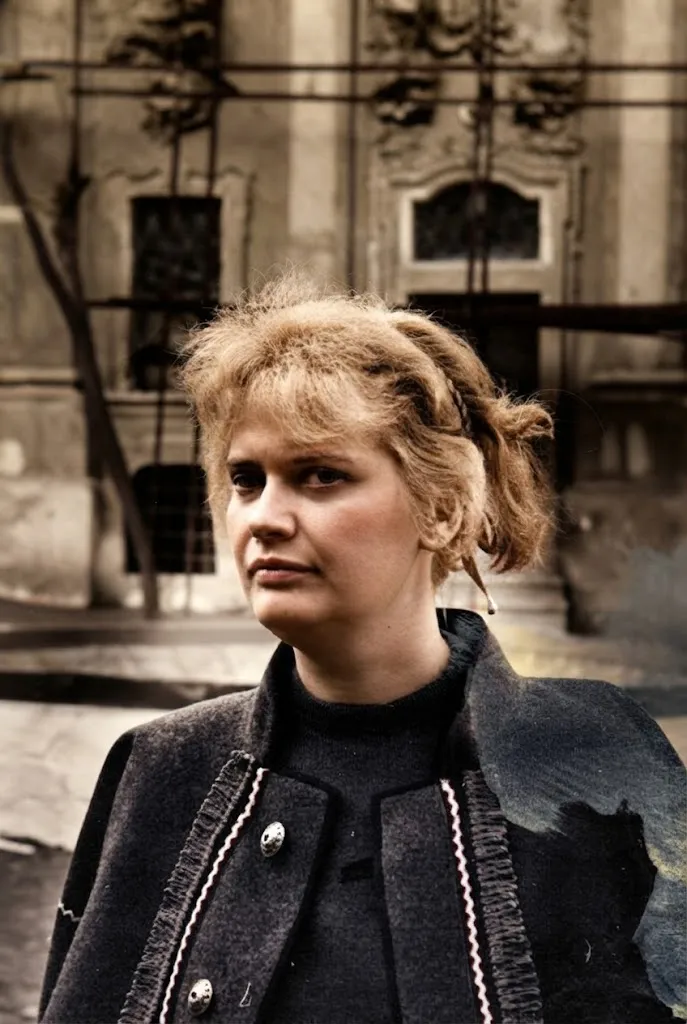
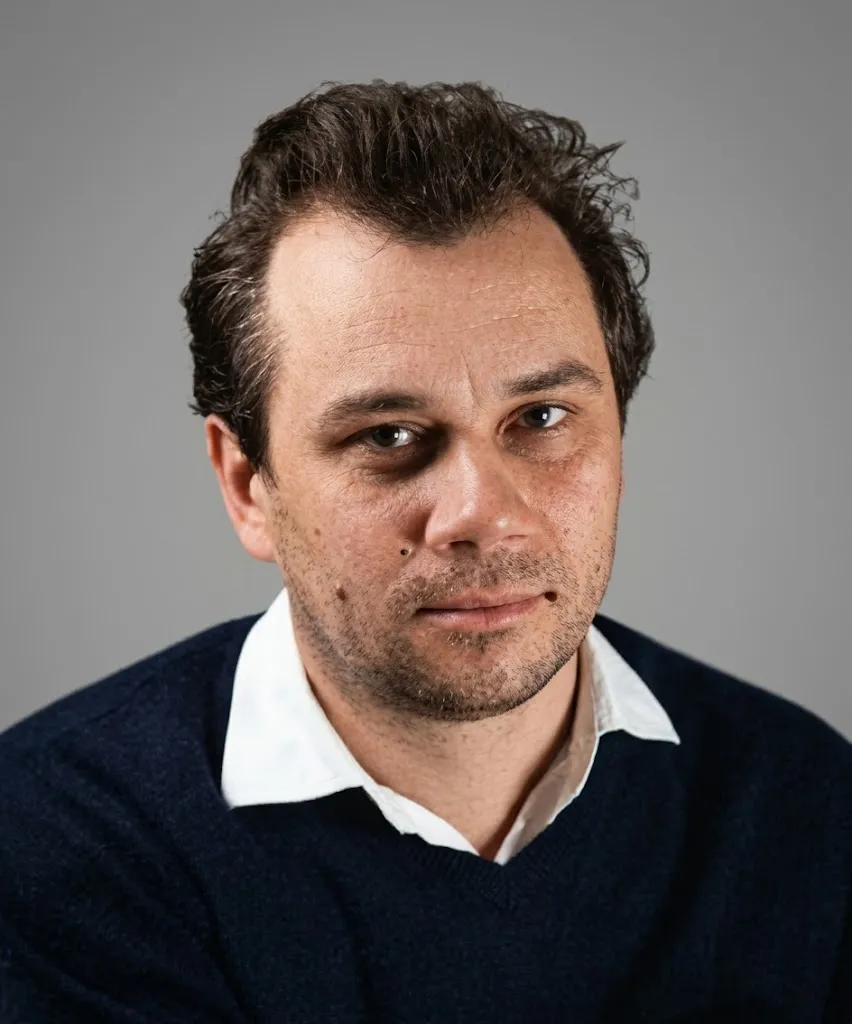
Stefaniia Shabatura
Tapestry artist, political prisoner
In her tapestry about Troy the Soviet regime recognised Ukraine, and was afraid. They sent Lviv artist Stefaniia Shabatura to the camps and burned her drawings, but couldn’t break her: in 1990 she raised the blue-and-yellow flag over Lviv City Hall herself.
Key accomplishments
- Tapestries Cassandra (1970–1971) and Lesya Ukrainka (1971); her diploma work Oleksa Dovbush (1967)
- Bookplates, drawings and watercolours; illustrations for the samvydav journals Yevshan-zillia and Ukrainskyi visnyk
- Member of the Ukrainian Helsinki Group (from 1979)
- Member of the first democratic Lviv City Council (1990–1995)
- Order of Princess Olga, 3rd class (1999); Order for Courage, 1st class (2006)
A Troy that looked like Ukraine
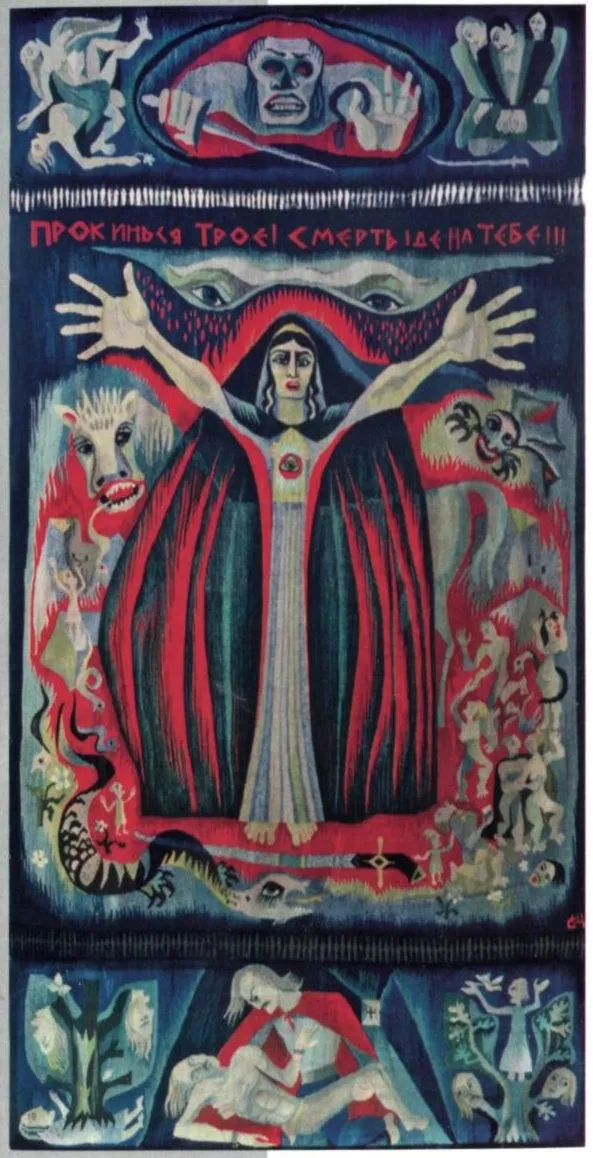
Can a tapestry become evidence in a criminal case? In 1970–1971 the Lviv artist Stefaniia Shabatura wove Cassandra, based on a drama by Lesya Ukrainka. In place of a Trojan sword it shows a sabre like a Cossack’s, and its colours are yellow and blue. Soviet ideologists read it as a hint at Ukraine: the tapestry was taken out of an exhibition in Kyiv and later added to the case against the artist. The regime was afraid of cloth and thread.
A successful artist who chose samvydav
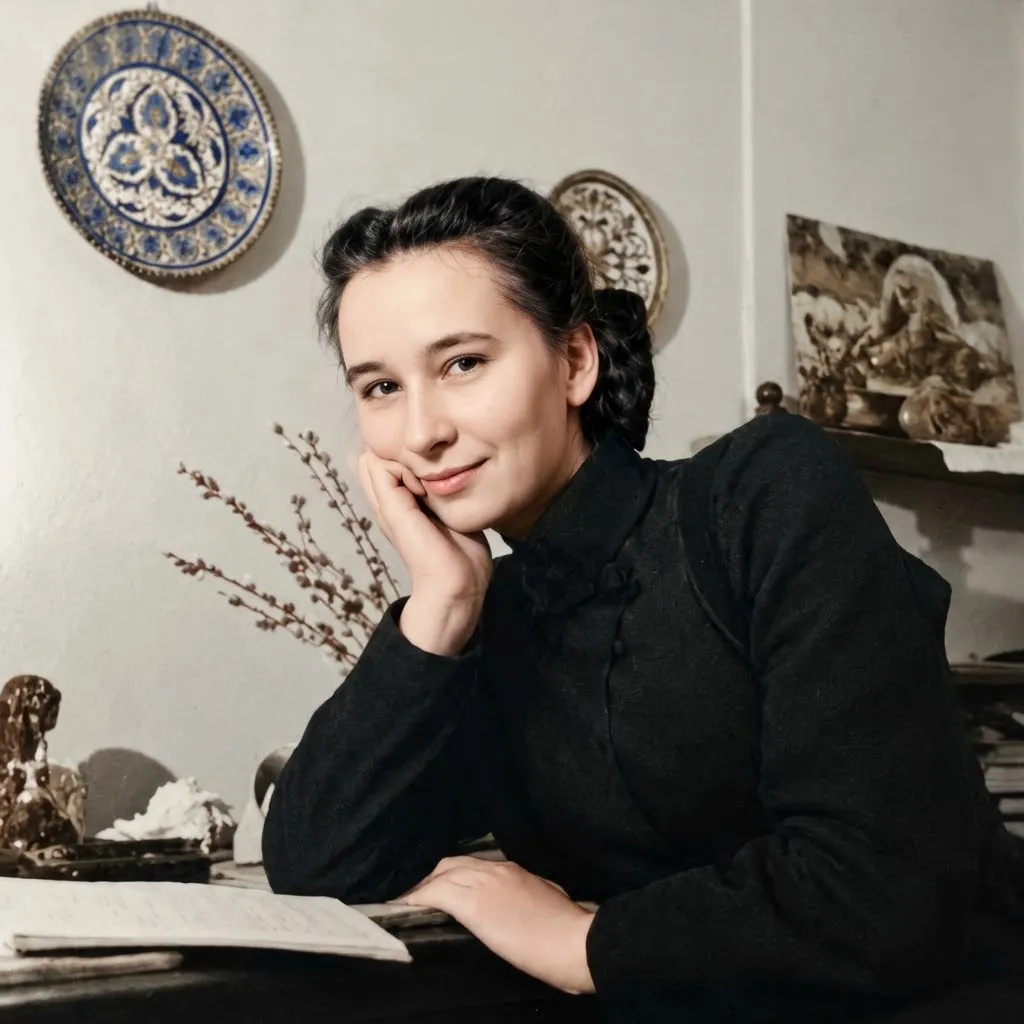
Stefaniia was born in 1938 in the village of Ivane-Zolote on the Dnister, in the Ternopil region. Her father was killed in the war; her mother was a folk artist. She graduated from the art school and the Institute of Applied and Decorative Art in Lviv, joined the Union of Artists, and the press praised her tapestries. A comfortable career lay ahead, but she chose otherwise: she passed around samvydav, the banned self-published literature, and went to the trials of Viacheslav Chornovil and Valentyn Moroz.
Carols and a sentence
At New Year 1972 she went carolling with a Lviv nativity troupe alongside Vasyl Stus and Ihor and Iryna Kalynets. On 12 January mass arrests of the Ukrainian intelligentsia began, and Shabatura was arrested at home. She was charged with passing around poems by Stus and Mykola Kholodnyi and an article by Moroz. A closed court gave her five years in a strict-regime camp and three years of exile.
The camp that couldn’t break her
In the women’s camp at Barashevo in Mordovia she didn’t keep quiet: she protested and went on hunger strike with other women prisoners, demanding to be recognised as political prisoners. For this she spent 115 days in punishment cells, and still didn’t back down. She was forbidden to paint. In late 1975 she was taken to Lviv for “re-education” and declared a hunger strike there. The camp then burned more than 150 of her drawings, and the Mordovian camps answered with protests.
From exile to the flag over City Hall
Even in exile in Makushino in the Kurgan region, where she was sent in 1977, she didn’t give in: in 1979 she declared herself a member of the Ukrainian Helsinki Group. Back in Lviv she spent a year under police supervision and worked as a street cleaner. In the late 1980s she joined the People’s Movement of Ukraine (Rukh) and the revival of the Greek Catholic Church. In 1990 she was elected to the first democratic city council, and that same year she raised the blue-and-yellow flag over Lviv City Hall. Stefaniia Shabatura died in Lviv on 17 December 2014.
Why it matters today
Stefaniia Shabatura proved that art can be resistance: in a tapestry about Troy the regime recognised Ukraine, and was afraid. Neither the camp, nor the punishment cells, nor her burned drawings made her give up what she thought and made. With Stus, Chornovil and the Kalynetses she carried the blue-and-yellow flag through the years it was banned, and raised it herself over a free Lviv. Her life reminds every artist that an honest work has a power that occupiers fear.