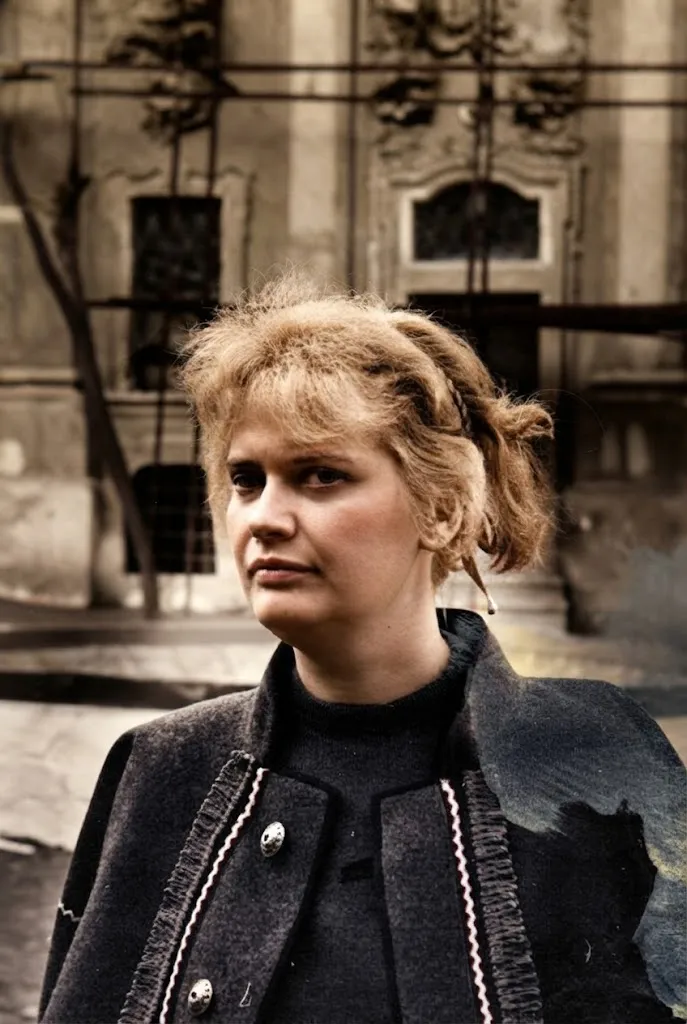
Nadiia Svitlychna
Rights activist, journalist, editor
She counted someone else's book as the most important work of her life: Stus's Palimpsests. Nadiia Svitlychna, one of the Sixtiers and sister of Ivan Svitlychnyi, served four years in the camps for samvydav, then told the world from exile in the US about repression in Ukraine.
Key accomplishments
- Samvydav in the 1960s: retyped, edited and passed on works by Ivan Dziuba, Yevhen Sverstiuk, Viacheslav Chornovil, Lina Kostenko, Vasyl Symonenko and others
- Prepared Vasyl Stus's Palimpsests for publication (1986)
- Published the Herald of Repression in Ukraine for the External Representation of the Ukrainian Helsinki Group (until 1985)
- Worked in the Ukrainian service of Radio Liberty (1983–1994), hosting the radio magazine Nadiia
- Compiled Mykola Rudenko's Behind Bars, Yaroslav Lesiv's An Instant and Mykola Horbal's Details of an Hourglass; co-compiled the memoirs of Ivan Svitlychnyi, Dobrookyi
- Initiator and founder of the Museum of the Sixtiers (from 1992); Shevchenko Prize (1994)
Someone else’s book, the most important of her life
Nadiia Svitlychna counted as the most important work of her life not a book of her own, but someone else’s. In 1986 Vasyl Stus’s Palimpsests came out abroad, poems he had written mostly in captivity. She was the one who prepared them for print.
Ivan’s sister
Nadiia was the younger sister of the critic Ivan Svitlychnyi. She was born in 1936 in the village of Polovynkyne in the Luhansk region (now Tolokivka). After Kharkiv University she taught in the Luhansk region, then moved to Kyiv. There she went to the Club of Creative Youth and retyped, edited and passed on samvydav, texts copied by hand past the censors: works by Ivan Dziuba, Lina Kostenko, Vasyl Symonenko and others. In 1967 she signed a protest against the trial of Viacheslav Chornovil.
In late 1970, in Vasylkiv near Kyiv, she and Yevhen Sverstiuk found the body of her murdered friend, the artist Alla Horska. Nadiia arranged her funeral and the memorial on her grave.
Four years in Mordovia
In the Mordovian camp Nadiia joined the political prisoners’ protests and hunger strikes. She ended up there after a wave of arrests in 1972: first her brother was arrested, and on 18 May so was Nadiia. Her two-year-old son Yarema was sent to a children’s home, and only later could the family take him back. For samvydav she was sentenced for “anti-Soviet agitation and propaganda” to four years in a strict-regime camp.
Leaving for good
Nadiia renounced her Soviet citizenship in 1976, the same year she was released. In Kyiv she was refused a residence permit and turned away from jobs, and threatened with arrest for “parasitism”. In 1977 she did not join the Ukrainian Helsinki Group, but promised to keep helping it. On 12 October 1978 Nadiia left with her two sons for Rome, and on 8 November she reached the United States.
A voice from across the ocean
In the US Svitlychna became a member of the External Representation of the Ukrainian Helsinki Group and, until 1985, published the Herald of Repression in Ukraine, on the arrests and trials of dissenters. From material smuggled out of the camps she made pamphlets and books, among them Mykola Rudenko’s collection Behind Bars. From 1983 to 1994 she worked in the Ukrainian service of Radio Liberty and hosted the radio magazine Nadiia. She also edited the women’s magazine Vira and worked with young people in Plast, the Ukrainian scouts.
A museum for a generation
Nadiia came to Kyiv in 1990 and went every day to the students on hunger strike in the square, without saying who she was. From 1992 she pushed for a Museum of the Sixtiers, later headed by Mykola Plakhotniuk, and gave it her share of the Shevchenko Prize, which she received in 1994 for her journalism and essays. Nadiia Svitlychna died on 8 August 2006 in Matawan, New Jersey. She was buried in Kyiv at Baikove Cemetery, next to her brother.
Why it matters today
Nadiia Svitlychna kept alive words the Soviet state tried to silence: first she retyped banned texts, then from across the ocean she told the world about every new sentence passed in Ukraine. Thanks to her work, Stus’s Palimpsests, one of the summits of Ukrainian poetry, reached its readers. She showed that even far from home you can serve your country every day, with words, with editing, with a voice on the air. The museum she conceived keeps the memory of a generation that chose the truth at the cost of its own freedom. Anyone who today documents crimes against Ukrainians and won’t let the world look away is carrying on her work.